SOLDES
Jusqu'à -70% sur une sélection d'articles*

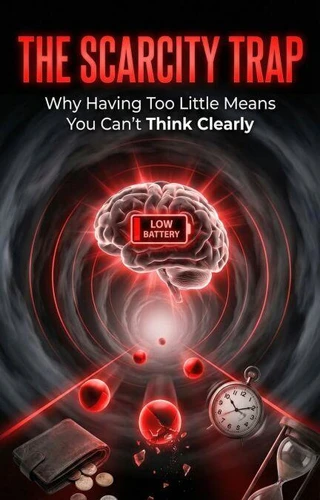
Scarcity Trap. Why Having Too Little Means You Can't Think Clearly
Par :Formats :
Disponible dans votre compte client Decitre ou Furet du Nord dès validation de votre commande. Le format ePub est :
- Compatible avec une lecture sur My Vivlio (smartphone, tablette, ordinateur)
- Compatible avec une lecture sur liseuses Vivlio
- Pour les liseuses autres que Vivlio, vous devez utiliser le logiciel Adobe Digital Edition. Non compatible avec la lecture sur les liseuses Kindle, Remarkable et Sony
 , qui est-ce ?
Notre partenaire de plateforme de lecture numérique où vous retrouverez l'ensemble de vos ebooks gratuitement
Pour en savoir plus sur nos ebooks, consultez notre aide en ligne ici
C'est si simple ! Lisez votre ebook avec l'app Vivlio sur votre tablette, mobile ou ordinateur :

- Nombre de pages147
- FormatePub
- ISBN978-3-565-25723-2
- EAN9783565257232
- Date de parution18/02/2026
- Protection num.pas de protection
- Taille552 Ko
- Infos supplémentairesepub
- ÉditeurEmphaloz Publishing House
Résumé
Why do poor people take payday loans with 400% interest? Why do busy executives make terrible decisions about their health? We often blame these behaviors on a lack of discipline or education. But behavioral economist Sendhil Mullainathan and psychologist Eldar Shafir propose a different, radical theory: Scarcity itself lowers your IQ.
"The Scarcity Trap" explains that when your brain is obsessed with a lack of something-whether it's money, time, or calories-it "tunnels" on that immediate problem.
This tunneling consumes massive amounts of cognitive bandwidth, effectively dropping your fluid intelligence by up to 13 points (equivalent to a night without sleep). This book explores how this "bandwidth tax" leads to a vicious cycle of bad decisions that perpetuate the scarcity. It moves the conversation from "character flaws" to "design flaws" in our environment and offers structural solutions for escaping the trap.
Whether you are drowning in debt or drowning in work, the psychology is the same: your brain is processing a shortage, not a life.
This tunneling consumes massive amounts of cognitive bandwidth, effectively dropping your fluid intelligence by up to 13 points (equivalent to a night without sleep). This book explores how this "bandwidth tax" leads to a vicious cycle of bad decisions that perpetuate the scarcity. It moves the conversation from "character flaws" to "design flaws" in our environment and offers structural solutions for escaping the trap.
Whether you are drowning in debt or drowning in work, the psychology is the same: your brain is processing a shortage, not a life.