SOLDES
Jusqu'à -70% sur une sélection d'articles*

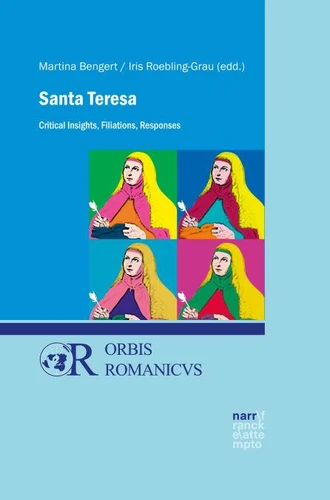
Santa Teresa. Critical Insights, Filiations, Responses
Par : ,Formats :
Disponible dans votre compte client Decitre ou Furet du Nord dès validation de votre commande. Le format ePub est :
- Compatible avec une lecture sur My Vivlio (smartphone, tablette, ordinateur)
- Compatible avec une lecture sur liseuses Vivlio
- Pour les liseuses autres que Vivlio, vous devez utiliser le logiciel Adobe Digital Edition. Non compatible avec la lecture sur les liseuses Kindle, Remarkable et Sony
 , qui est-ce ?
Notre partenaire de plateforme de lecture numérique où vous retrouverez l'ensemble de vos ebooks gratuitement
Pour en savoir plus sur nos ebooks, consultez notre aide en ligne ici
C'est si simple ! Lisez votre ebook avec l'app Vivlio sur votre tablette, mobile ou ordinateur :

- Nombre de pages360
- FormatePub
- ISBN978-3-8233-0179-0
- EAN9783823301790
- Date de parution15/07/2019
- Protection num.Digital Watermarking
- Taille4 Mo
- Infos supplémentairesepub
- ÉditeurGunter Narr Verlag
Résumé
Even prior to her widely observed 500th anniversary, Teresa of Ávila (1515-1582) was already considered one of the most important authors of occidental mysticism. This volume gathers together contributions from a multitude of disciplines to explore the writings and reception of the Spanish author and saint. Previously disregarded lines of tradition are explored for a new understanding of her oeuvre, which is examined here with special regard to the potential to affect its readers.
Teresa proves to not only be an accomplished, but also a very literary writer. Santa Teresa proves to be a figure of cultural memory, and the diffusion of her thinking is traced up to the present, whereby a recurrent focus is put on the phenomenon of ecstasy. Part of the widespread resonance of her work is the image of the iconic saint whose emergence as an international phenomenon is presented here for the first time.
The volume is closed by an interview with Marina Abramovi answering four questions about Teresa.
Teresa proves to not only be an accomplished, but also a very literary writer. Santa Teresa proves to be a figure of cultural memory, and the diffusion of her thinking is traced up to the present, whereby a recurrent focus is put on the phenomenon of ecstasy. Part of the widespread resonance of her work is the image of the iconic saint whose emergence as an international phenomenon is presented here for the first time.
The volume is closed by an interview with Marina Abramovi answering four questions about Teresa.