
Sanskrit, Rote Learning and Cognates
Par :Formats :
Disponible dans votre compte client Decitre ou Furet du Nord dès validation de votre commande. Le format ePub est :
- Compatible avec une lecture sur My Vivlio (smartphone, tablette, ordinateur)
- Compatible avec une lecture sur liseuses Vivlio
- Pour les liseuses autres que Vivlio, vous devez utiliser le logiciel Adobe Digital Edition. Non compatible avec la lecture sur les liseuses Kindle, Remarkable et Sony
 , qui est-ce ?
Notre partenaire de plateforme de lecture numérique où vous retrouverez l'ensemble de vos ebooks gratuitement
Pour en savoir plus sur nos ebooks, consultez notre aide en ligne ici
C'est si simple ! Lisez votre ebook avec l'app Vivlio sur votre tablette, mobile ou ordinateur :

- FormatePub
- ISBN978-0-9941965-5-2
- EAN9780994196552
- Date de parution13/02/2026
- Protection num.pas de protection
- Infos supplémentairesepub
- ÉditeurHarry Nap
Résumé
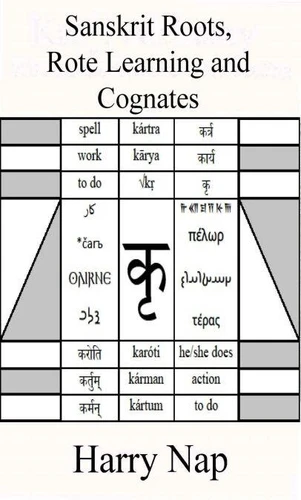
In addition to its vast and varied literature, Sanskrit is of great interest due to its antiquity and its geographical reach as part of the Indo-European family. The basic feature of Sanskrit Roots, Rote Learning and Cognates is one set of seven Sanskrit verb roots per unit. Each individual root shows the form in Devanagari, the transliteration in IAST (International Alphabet of Sanskrit Transliteration), the third person singular of the present indicative of the verb, an English translation, possible cognates mainly in Greek and Latin (367 in total) and often an adjective or a noun of the verb root.
In addition, the number and the voice(s) will be listed. At the end of each unit the seven roots are listed once more in order to facilitate rote learning. There are 23 units per chapter amounting to 161 roots. In total there are 10 chapters bringing the total number of roots to 1610. The rationale behind memorising roots is the fact that they are the key to word formations in Sanskrit. The process of word formation is consistent and transparent and therefore spotting these patterns -pattern recognition- will be a practical first step in dealing with Sanskrit texts.
Suitable as a supplementary text for beginning students of Sanskrit and anyone with a general interest in Sanskrit and European languages.
In addition, the number and the voice(s) will be listed. At the end of each unit the seven roots are listed once more in order to facilitate rote learning. There are 23 units per chapter amounting to 161 roots. In total there are 10 chapters bringing the total number of roots to 1610. The rationale behind memorising roots is the fact that they are the key to word formations in Sanskrit. The process of word formation is consistent and transparent and therefore spotting these patterns -pattern recognition- will be a practical first step in dealing with Sanskrit texts.
Suitable as a supplementary text for beginning students of Sanskrit and anyone with a general interest in Sanskrit and European languages.


