SOLDES
Jusqu'à -70% sur une sélection d'articles*

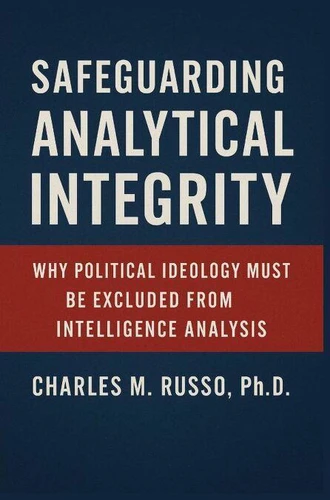
Safeguarding Analytical Integrity Why Political Ideology Must Be Excluded from Intelligence Analysis
Par :Formats :
Disponible dans votre compte client Decitre ou Furet du Nord dès validation de votre commande. Le format ePub est :
- Compatible avec une lecture sur My Vivlio (smartphone, tablette, ordinateur)
- Compatible avec une lecture sur liseuses Vivlio
- Pour les liseuses autres que Vivlio, vous devez utiliser le logiciel Adobe Digital Edition. Non compatible avec la lecture sur les liseuses Kindle, Remarkable et Sony
 , qui est-ce ?
Notre partenaire de plateforme de lecture numérique où vous retrouverez l'ensemble de vos ebooks gratuitement
Pour en savoir plus sur nos ebooks, consultez notre aide en ligne ici
C'est si simple ! Lisez votre ebook avec l'app Vivlio sur votre tablette, mobile ou ordinateur :

- FormatePub
- ISBN8231620203
- EAN9798231620203
- Date de parution09/11/2025
- Protection num.pas de protection
- Infos supplémentairesepub
- ÉditeurWalzone Press
Résumé
Intelligence failures are rarely caused by a lack of data-they result from flawed reasoning, unconscious bias, and political distortion. From the Gulf of Tonkin to Iraq's weapons of mass destruction and the controversies of recent administrations, history shows that when analysis bends to ideology, trust in the Intelligence Community collapses. Safeguarding Analytical Integrity is both a warning and a blueprint.
Drawing on decades of experience in the U. S. Navy, the FBI, and the broader Intelligence Community, as well as years of teaching and mentoring analysts, Charles M. Russo demonstrates how objectivity must be engineered-not assumed. The book operationalizes the Intelligence Community's Analytic Standards (ICD-203) and builds them into a living system of logic, structured analytic techniques, transparent writing practices, and empowered review mechanisms.
Blending case studies, from COINTELPRO to "Arctic Frost, " with practical tools-checklists, dashboards, training exercises, and review rubrics-this book equips analysts, educators, and policymakers with a toolkit to make rigor routine. It also explores the philosophical foundations of intelligence, showing why epistemology, ethics, and logic are as vital to national security as satellites and signals intercepts.
Written in a clear and uncompromising style, this book is essential reading for intelligence professionals, students, oversight staff, and anyone committed to preserving democratic trust. By treating critical thinking as both a discipline and a duty, Safeguarding Analytical Integrity offers a roadmap for building an Intelligence Community that can resist political pressure, embrace transparency, and deliver truth when it matters most.
Drawing on decades of experience in the U. S. Navy, the FBI, and the broader Intelligence Community, as well as years of teaching and mentoring analysts, Charles M. Russo demonstrates how objectivity must be engineered-not assumed. The book operationalizes the Intelligence Community's Analytic Standards (ICD-203) and builds them into a living system of logic, structured analytic techniques, transparent writing practices, and empowered review mechanisms.
Blending case studies, from COINTELPRO to "Arctic Frost, " with practical tools-checklists, dashboards, training exercises, and review rubrics-this book equips analysts, educators, and policymakers with a toolkit to make rigor routine. It also explores the philosophical foundations of intelligence, showing why epistemology, ethics, and logic are as vital to national security as satellites and signals intercepts.
Written in a clear and uncompromising style, this book is essential reading for intelligence professionals, students, oversight staff, and anyone committed to preserving democratic trust. By treating critical thinking as both a discipline and a duty, Safeguarding Analytical Integrity offers a roadmap for building an Intelligence Community that can resist political pressure, embrace transparency, and deliver truth when it matters most.