
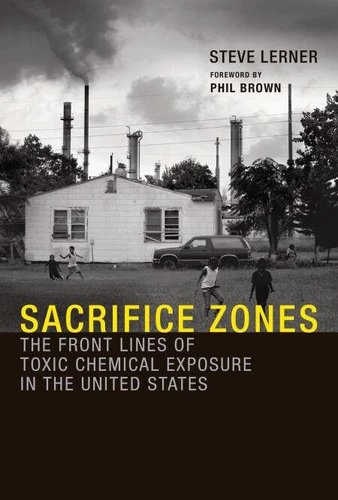
Sacrifice Zones. The Front Lines of Toxic Chemical Exposure in the United States
Par : ,Formats :
Disponible dans votre compte client Decitre ou Furet du Nord dès validation de votre commande. Le format ePub protégé est :
- Compatible avec une lecture sur My Vivlio (smartphone, tablette, ordinateur)
- Compatible avec une lecture sur liseuses Vivlio
- Pour les liseuses autres que Vivlio, vous devez utiliser le logiciel Adobe Digital Edition. Non compatible avec la lecture sur les liseuses Kindle, Remarkable et Sony
- Non compatible avec un achat hors France métropolitaine
 , qui est-ce ?
Notre partenaire de plateforme de lecture numérique où vous retrouverez l'ensemble de vos ebooks gratuitement
Pour en savoir plus sur nos ebooks, consultez notre aide en ligne ici
C'est si simple ! Lisez votre ebook avec l'app Vivlio sur votre tablette, mobile ou ordinateur :

- Nombre de pages368
- FormatePub
- ISBN978-0-262-28874-3
- EAN9780262288743
- Date de parution21/09/2012
- Protection num.Adobe DRM
- Taille625 Ko
- Infos supplémentairesepub
- ÉditeurThe MIT Press
Résumé
The stories of residents of low-income communities across the country who took action when pollution from heavy industry contaminated their towns. Across the United States, thousands of people, most of them in low-income or minority communities, live next to heavily polluting industrial sites. Many of them reach a point at which they say "Enough is enough." After living for years with poisoned air and water, contaminated soil, and pollution-related health problems, they start to take action-organizing, speaking up, documenting the effects of pollution on their neighborhoods.
In Sacrifice Zones, Steve Lerner tells the stories of twelve communities, from Brooklyn to Pensacola, that rose up to fight the industries and military bases causing disproportionately high levels of chemical pollution. He calls these low-income neighborhoods "sacrifice zones." And he argues that residents of these sacrifice zones, tainted with chemical pollutants, need additional regulatory protections.
Sacrifice Zones goes beyond the disheartening statistics and gives us the voices of the residents themselves, offering compelling portraits of accidental activists who have become grassroots leaders in the struggle for environmental justice and details the successful tactics they have used on the fenceline with heavy industry.
In Sacrifice Zones, Steve Lerner tells the stories of twelve communities, from Brooklyn to Pensacola, that rose up to fight the industries and military bases causing disproportionately high levels of chemical pollution. He calls these low-income neighborhoods "sacrifice zones." And he argues that residents of these sacrifice zones, tainted with chemical pollutants, need additional regulatory protections.
Sacrifice Zones goes beyond the disheartening statistics and gives us the voices of the residents themselves, offering compelling portraits of accidental activists who have become grassroots leaders in the struggle for environmental justice and details the successful tactics they have used on the fenceline with heavy industry.