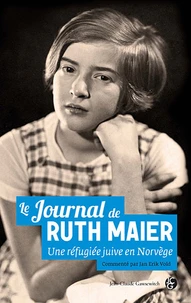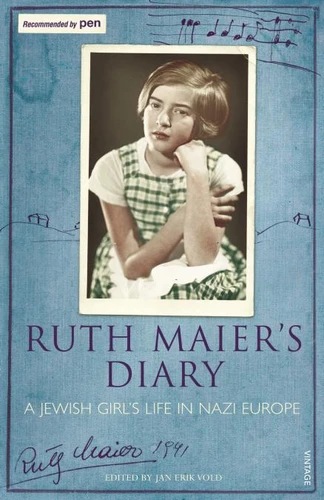
Ruth Maier's Diary. A Jewish girl's life in Nazi Europe
Par :Formats :
Disponible dans votre compte client Decitre ou Furet du Nord dès validation de votre commande. Le format ePub protégé est :
- Compatible avec une lecture sur My Vivlio (smartphone, tablette, ordinateur)
- Compatible avec une lecture sur liseuses Vivlio
- Pour les liseuses autres que Vivlio, vous devez utiliser le logiciel Adobe Digital Edition. Non compatible avec la lecture sur les liseuses Kindle, Remarkable et Sony
- Non compatible avec un achat hors France métropolitaine
 , qui est-ce ?
Notre partenaire de plateforme de lecture numérique où vous retrouverez l'ensemble de vos ebooks gratuitement
Pour en savoir plus sur nos ebooks, consultez notre aide en ligne ici
C'est si simple ! Lisez votre ebook avec l'app Vivlio sur votre tablette, mobile ou ordinateur :

- Nombre de pages432
- FormatePub
- ISBN978-1-4481-6248-2
- EAN9781448162482
- Date de parution31/01/2013
- Protection num.Adobe DRM
- Infos supplémentairesepub
- ÉditeurVintage Digital
Résumé
Ruth Maier was born into a middle-class Jewish family in interwar Vienna. Following the Anschluss of Austria in March 1938, her world collapsed. In early 1939, her sister having left for England, Ruth emigrated to Norway and lived with a family in Lillestrøm, near Oslo. Although she loved many things about her new country and its people, Ruth became increasingly isolated until she met a soulmate, Gunvor Hofmo, who was to become a celebrated poet.
When Norway became a Nazi conquest in April 1940, Ruth's effort to join the rest of her family in Britain became ever more urgent. Ruth Maier kept a diary from 1934 until she was deported to Auschwitz in 1942 at the age of twenty-two. Although she was only in her teens, she shows a sophisticated understanding of the political forces shaping Europe. Ruth is lyrical, witty and incisive and explores universal themes of isolation, identity, love, friendship, desire and justice.
Most of all, she seeks what it means to be a human being.
When Norway became a Nazi conquest in April 1940, Ruth's effort to join the rest of her family in Britain became ever more urgent. Ruth Maier kept a diary from 1934 until she was deported to Auschwitz in 1942 at the age of twenty-two. Although she was only in her teens, she shows a sophisticated understanding of the political forces shaping Europe. Ruth is lyrical, witty and incisive and explores universal themes of isolation, identity, love, friendship, desire and justice.
Most of all, she seeks what it means to be a human being.