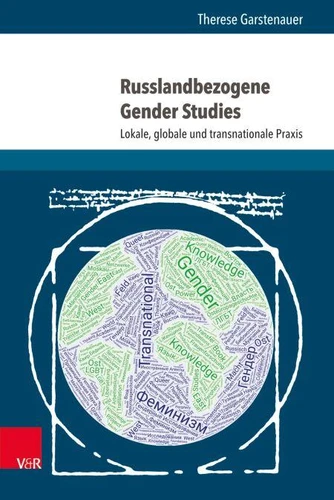
Russlandbezogene Gender Studies. Lokale, globale und transnationale Praxis
Par :Formats :
Disponible dans votre compte client Decitre ou Furet du Nord dès validation de votre commande. Le format PDF est :
- Compatible avec une lecture sur My Vivlio (smartphone, tablette, ordinateur)
- Compatible avec une lecture sur liseuses Vivlio
- Pour les liseuses autres que Vivlio, vous devez utiliser le logiciel Adobe Digital Edition. Non compatible avec la lecture sur les liseuses Kindle, Remarkable et Sony
 , qui est-ce ?
Notre partenaire de plateforme de lecture numérique où vous retrouverez l'ensemble de vos ebooks gratuitement
Pour en savoir plus sur nos ebooks, consultez notre aide en ligne ici
C'est si simple ! Lisez votre ebook avec l'app Vivlio sur votre tablette, mobile ou ordinateur :

- Nombre de pages313
- FormatPDF
- ISBN978-3-8470-0876-7
- EAN9783847008767
- Date de parution12/11/2018
- Protection num.pas de protection
- Taille7 Mo
- Infos supplémentairespdf
- ÉditeurV&R Unipress
Résumé
Es macht einen Unterschied, ob jemand in Saratov, Moskau, Wien oder New York über Geschlechterverhältnisse in Russland forscht. In diesem Band wird die globale Arbeitsteilung in den Sozial- und Geisteswissenschaften diskutiert: Wo entstehen Theorien, wo werden sie angewendet? Wer liefert - oder ist selbst - empirisches Datenmaterial? Welchen Stellenwert haben in Russland arbeitende Forscher_innen in dieser Konstellation? Anhand zahlreicher Interviews mit russischen, amerikanischen, deutschen, englischen und österreichischen Protagonist_innen dieses Feldes werden die Grenzen und Möglichkeiten transnationaler, russlandbezogener Geschlechterforschung aufgezeigt.
Darüber hinaus gibt die Autorin Einblicke in die aktuelle Situation der Geschlechterforschung in Russland. When conducting research on gender relations in Russia it makes a difference whether one is located in Saratov, Moscow, Vienna or New York. The author tackles questions of the global division of labour within the social sciences and humanities: Where are theories developed, where do they get applied? Who delivers - or even becomes - the empirical data for research? What is the status of Russia-based scholars within this constellation? The limits and possibilities of transnational Russia-related Gender Studies are expounded, based on the analysis of numerous interviews with Russian, American, Austrian, German, and English protagonists in this field.
Furthermore, the reader is provided with insights into the current state of affairs of Gender Studies in Russia.
Darüber hinaus gibt die Autorin Einblicke in die aktuelle Situation der Geschlechterforschung in Russland. When conducting research on gender relations in Russia it makes a difference whether one is located in Saratov, Moscow, Vienna or New York. The author tackles questions of the global division of labour within the social sciences and humanities: Where are theories developed, where do they get applied? Who delivers - or even becomes - the empirical data for research? What is the status of Russia-based scholars within this constellation? The limits and possibilities of transnational Russia-related Gender Studies are expounded, based on the analysis of numerous interviews with Russian, American, Austrian, German, and English protagonists in this field.
Furthermore, the reader is provided with insights into the current state of affairs of Gender Studies in Russia.