
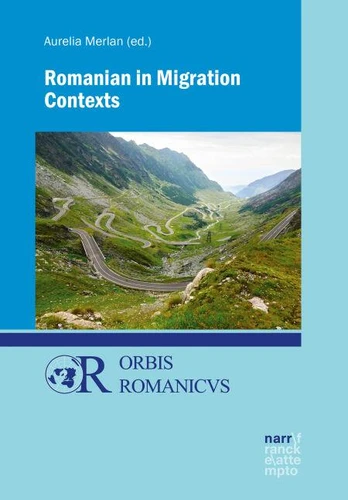
Romanian in Migration Contexts
Par :Formats :
Disponible dans votre compte client Decitre ou Furet du Nord dès validation de votre commande. Le format ePub est :
- Compatible avec une lecture sur My Vivlio (smartphone, tablette, ordinateur)
- Compatible avec une lecture sur liseuses Vivlio
- Pour les liseuses autres que Vivlio, vous devez utiliser le logiciel Adobe Digital Edition. Non compatible avec la lecture sur les liseuses Kindle, Remarkable et Sony
 , qui est-ce ?
Notre partenaire de plateforme de lecture numérique où vous retrouverez l'ensemble de vos ebooks gratuitement
Pour en savoir plus sur nos ebooks, consultez notre aide en ligne ici
C'est si simple ! Lisez votre ebook avec l'app Vivlio sur votre tablette, mobile ou ordinateur :

- Nombre de pages337
- FormatePub
- ISBN978-3-8233-0258-2
- EAN9783823302582
- Date de parution17/06/2024
- Protection num.Digital Watermarking
- Taille4 Mo
- Infos supplémentairesepub
- ÉditeurGunter Narr Verlag
Résumé
As a result of migration, more than 25% of Romanian L1 speakers live outside of Romania and Moldova - mostly in other European countries, but also in America and Australia. In the meantime, many second-generation speakers have become part of this group. The situation has resulted in various different constellations of language contact, both within the group of Romance languages and amongst typologically different and unrelated languages.
Despite the fact that these contact scenarios present a wide range of research perspectives, there have been hardly any studies on Romanian as a language of migrants up until now. The volume Romanian in the Context of Migration brings together contributions on the Romanian language in Europe and in North America in the context of current migration linguistics. It includes studies on Romanian in Canada, France, Germany, Italy, Portugal, Slovenia and Spain and on the Romanian of those who return to Romania and Moldova. Über 25 % der Sprecher mit Rumänisch als L1 leben heute - infolge der Migration - außerhalb von Rumänien und der Republik Moldau, zumeist in anderen Ländern Europas, aber auch in Amerika und Australien.
Inzwischen sind zahlreiche Vertreter der 2. Generation hinzugekommen. Aus dieser Situation ergeben sich unterschiedliche Konstellationen von Sprachkontakt, sowohl innerromanisch als auch mit typologisch verschiedenen und nicht verwandten Sprachen. All diese Kontaktszenarien eröffnen vielfältige Forschungsperspektiven. Dennoch gibt es bislang kaum Untersuchungen zum Rumänischen als Sprache von Migrantinnen und Migranten.
Der Sammelband Romanian in the Context of Migration vereint Beiträge zum Rumänischen in Europa und Nordamerika im Kontext der aktuellen Migrationslinguistik. Er umfasst Studien zum Rumänischen in Deutschland, Frankreich, Italien, Kanada, Portugal, Slowenien und Spanien und zum Rumänischen der Rückkehrer.
Despite the fact that these contact scenarios present a wide range of research perspectives, there have been hardly any studies on Romanian as a language of migrants up until now. The volume Romanian in the Context of Migration brings together contributions on the Romanian language in Europe and in North America in the context of current migration linguistics. It includes studies on Romanian in Canada, France, Germany, Italy, Portugal, Slovenia and Spain and on the Romanian of those who return to Romania and Moldova. Über 25 % der Sprecher mit Rumänisch als L1 leben heute - infolge der Migration - außerhalb von Rumänien und der Republik Moldau, zumeist in anderen Ländern Europas, aber auch in Amerika und Australien.
Inzwischen sind zahlreiche Vertreter der 2. Generation hinzugekommen. Aus dieser Situation ergeben sich unterschiedliche Konstellationen von Sprachkontakt, sowohl innerromanisch als auch mit typologisch verschiedenen und nicht verwandten Sprachen. All diese Kontaktszenarien eröffnen vielfältige Forschungsperspektiven. Dennoch gibt es bislang kaum Untersuchungen zum Rumänischen als Sprache von Migrantinnen und Migranten.
Der Sammelband Romanian in the Context of Migration vereint Beiträge zum Rumänischen in Europa und Nordamerika im Kontext der aktuellen Migrationslinguistik. Er umfasst Studien zum Rumänischen in Deutschland, Frankreich, Italien, Kanada, Portugal, Slowenien und Spanien und zum Rumänischen der Rückkehrer.