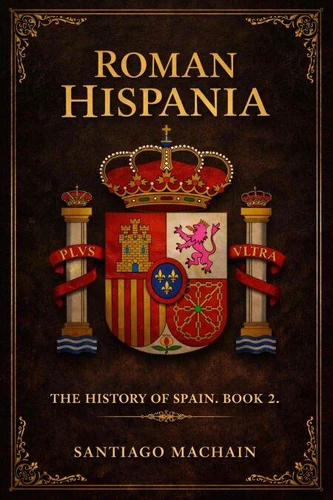
Roman Hispania. The History of Spain, #2
Par :Formats :
Disponible dans votre compte client Decitre ou Furet du Nord dès validation de votre commande. Le format ePub est :
- Compatible avec une lecture sur My Vivlio (smartphone, tablette, ordinateur)
- Compatible avec une lecture sur liseuses Vivlio
- Pour les liseuses autres que Vivlio, vous devez utiliser le logiciel Adobe Digital Edition. Non compatible avec la lecture sur les liseuses Kindle, Remarkable et Sony
 , qui est-ce ?
Notre partenaire de plateforme de lecture numérique où vous retrouverez l'ensemble de vos ebooks gratuitement
Pour en savoir plus sur nos ebooks, consultez notre aide en ligne ici
C'est si simple ! Lisez votre ebook avec l'app Vivlio sur votre tablette, mobile ou ordinateur :

- FormatePub
- ISBN8235497504
- EAN9798235497504
- Date de parution04/06/2026
- Protection num.pas de protection
- Infos supplémentairesepub
- ÉditeurIoakim Ioakim
Résumé
Roman Hispania explores the transformation of the Iberian Peninsula under Roman rule, from fierce resistance against conquest to becoming one of the most important regions of the Roman Empire. Through legendary wars, political upheavals, economic expansion, and religious transformation, the book follows the rise of Hispania from a rebellious frontier into a land that produced emperors, philosophers, generals, and immense wealth for Rome.
The narrative covers decisive moments such as the campaigns of Scipio Africanus, the resistance of Viriato and Numantia, the dramatic Sertorian War, and the final clash between Julius Caesar and Pompey at the Battle of Munda. It also examines the prosperity of the Pax Romana, the administrative organization of the peninsula, the rise of emperors like Trajan, Hadrian, and Theodosius, and the enormous economic importance of the gold mines of Las Médulas and the olive oil trade of Baetica.
The narrative covers decisive moments such as the campaigns of Scipio Africanus, the resistance of Viriato and Numantia, the dramatic Sertorian War, and the final clash between Julius Caesar and Pompey at the Battle of Munda. It also examines the prosperity of the Pax Romana, the administrative organization of the peninsula, the rise of emperors like Trajan, Hadrian, and Theodosius, and the enormous economic importance of the gold mines of Las Médulas and the olive oil trade of Baetica.
A propos de Santiago Machain

7,99 €

6,99 €


6,99 €

6,99 €







6,99 €

6,99 €




6,99 €