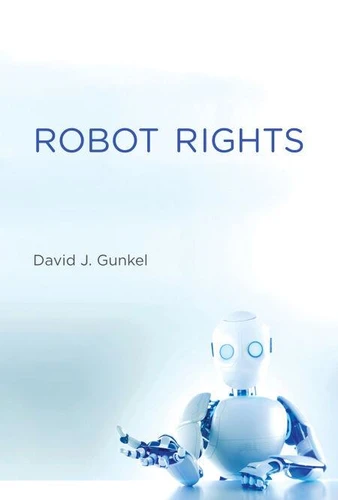
Robot Rights
Par :Formats :
Disponible dans votre compte client Decitre ou Furet du Nord dès validation de votre commande. Le format ePub protégé est :
- Compatible avec une lecture sur My Vivlio (smartphone, tablette, ordinateur)
- Compatible avec une lecture sur liseuses Vivlio
- Pour les liseuses autres que Vivlio, vous devez utiliser le logiciel Adobe Digital Edition. Non compatible avec la lecture sur les liseuses Kindle, Remarkable et Sony
- Non compatible avec un achat hors France métropolitaine
 , qui est-ce ?
Notre partenaire de plateforme de lecture numérique où vous retrouverez l'ensemble de vos ebooks gratuitement
Pour en savoir plus sur nos ebooks, consultez notre aide en ligne ici
C'est si simple ! Lisez votre ebook avec l'app Vivlio sur votre tablette, mobile ou ordinateur :

- Nombre de pages256
- FormatePub
- ISBN978-0-262-34857-7
- EAN9780262348577
- Date de parution13/11/2018
- Protection num.Adobe DRM
- Taille339 Ko
- Infos supplémentairesepub
- ÉditeurThe MIT Press
Résumé
A provocative attempt to think about what was previously considered unthinkable: a serious philosophical case for the rights of robots. We are in the midst of a robot invasion, as devices of different configurations and capabilities slowly but surely come to take up increasingly important positions in everyday social reality-self-driving vehicles, recommendation algorithms, machine learning decision making systems, and social robots of various forms and functions.
Although considerable attention has already been devoted to the subject of robots and responsibility, the question concerning the social status of these artifacts has been largely overlooked. In this book, David Gunkel offers a provocative attempt to think about what has been previously regarded as unthinkable: whether and to what extent robots and other technological artifacts of our own making can and should have any claim to moral and legal standing.
In his analysis, Gunkel invokes the philosophical distinction (developed by David Hume) between "is" and "ought" in order to evaluate and analyze the different arguments regarding the question of robot rights. In the course of his examination, Gunkel finds that none of the existing positions or proposals hold up under scrutiny. In response to this, he then offers an innovative alternative proposal that effectively flips the script on the is/ought problem by introducing another, altogether different way to conceptualize the social situation of robots and the opportunities and challenges they present to existing moral and legal systems.
Although considerable attention has already been devoted to the subject of robots and responsibility, the question concerning the social status of these artifacts has been largely overlooked. In this book, David Gunkel offers a provocative attempt to think about what has been previously regarded as unthinkable: whether and to what extent robots and other technological artifacts of our own making can and should have any claim to moral and legal standing.
In his analysis, Gunkel invokes the philosophical distinction (developed by David Hume) between "is" and "ought" in order to evaluate and analyze the different arguments regarding the question of robot rights. In the course of his examination, Gunkel finds that none of the existing positions or proposals hold up under scrutiny. In response to this, he then offers an innovative alternative proposal that effectively flips the script on the is/ought problem by introducing another, altogether different way to conceptualize the social situation of robots and the opportunities and challenges they present to existing moral and legal systems.
A propos de David J. Gunkel
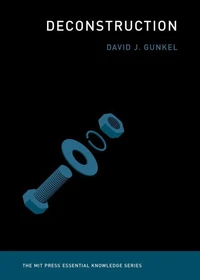
Deconstruction
E-book
15,65 €
49,05 €