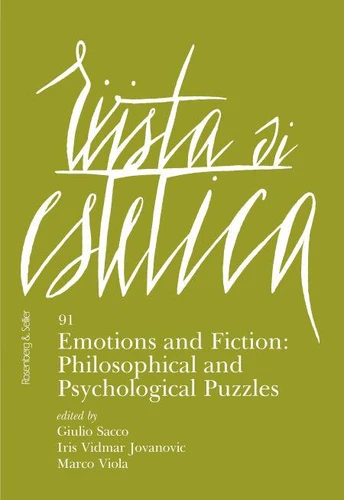
Rivista di Estetica 91. Emotions and Fiction: Philosophical and Psychological Puzzles
Par : , ,Formats :
Disponible dans votre compte client Decitre ou Furet du Nord dès validation de votre commande. Le format PDF est :
- Compatible avec une lecture sur My Vivlio (smartphone, tablette, ordinateur)
- Compatible avec une lecture sur liseuses Vivlio
- Pour les liseuses autres que Vivlio, vous devez utiliser le logiciel Adobe Digital Edition. Non compatible avec la lecture sur les liseuses Kindle, Remarkable et Sony
 , qui est-ce ?
Notre partenaire de plateforme de lecture numérique où vous retrouverez l'ensemble de vos ebooks gratuitement
Pour en savoir plus sur nos ebooks, consultez notre aide en ligne ici
C'est si simple ! Lisez votre ebook avec l'app Vivlio sur votre tablette, mobile ou ordinateur :

- Nombre de pages222
- FormatPDF
- ISBN1259934604
- EAN9791259934604
- Date de parution25/05/2026
- Protection num.Digital Watermarking
- Taille881 Ko
- Infos supplémentairespdf
- ÉditeurRosenberg & Sellier
Résumé
This special issue explores one of the most intriguing puzzles in aesthetics and philosophy of mind: our emotional engagement with fiction. Why do we have emotions toward events and characters we know to be non-existent? And what do these responses reveal about the nature, rationality, and value of emotions? Bringing together leading philosophers and emerging scholars, the volume revisits classic debates - from the paradox of fiction to the appeal of tragedy and horror - while also offering new perspectives on phenomena such as emotional recalcitrance, moral self-knowledge, and the attraction of "junk" fiction.
The contributions show how engagement with fiction shapes our emotional lives, evaluative outlooks, and understanding of ourselves. The result is a rich and interdisciplinary dialogue that underscores both the enduring vitality of these questions and their broader significance for theories of emotion, imagination, and knowledge.
The contributions show how engagement with fiction shapes our emotional lives, evaluative outlooks, and understanding of ourselves. The result is a rich and interdisciplinary dialogue that underscores both the enduring vitality of these questions and their broader significance for theories of emotion, imagination, and knowledge.