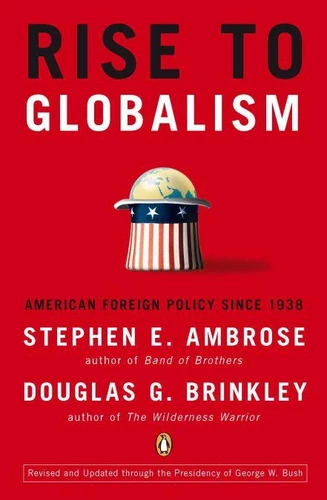
Rise to Globalism. American Foreign Policy Since 1938, Ninth Revised Edition
Par : ,Formats :
Disponible dans votre compte client Decitre ou Furet du Nord dès validation de votre commande. Le format ePub protégé est :
- Compatible avec une lecture sur My Vivlio (smartphone, tablette, ordinateur)
- Compatible avec une lecture sur liseuses Vivlio
- Pour les liseuses autres que Vivlio, vous devez utiliser le logiciel Adobe Digital Edition. Non compatible avec la lecture sur les liseuses Kindle, Remarkable et Sony
- Non compatible avec un achat hors France métropolitaine
 , qui est-ce ?
Notre partenaire de plateforme de lecture numérique où vous retrouverez l'ensemble de vos ebooks gratuitement
Pour en savoir plus sur nos ebooks, consultez notre aide en ligne ici
C'est si simple ! Lisez votre ebook avec l'app Vivlio sur votre tablette, mobile ou ordinateur :

- Nombre de pages592
- FormatePub
- ISBN978-1-101-50129-0
- EAN9781101501290
- Date de parution22/12/2010
- Protection num.Adobe DRM
- Taille2 Mo
- Infos supplémentairesepub
- ÉditeurPenguin Books
Résumé
In this compelling and informative exploration of American foreign policy, Stephen E. Ambrose and Douglas G. Brinkley delve into the evolution of the United States' global engagement. Since it first appeared in 1971, Rise to Globalism has sold hundreds of thousands of copies. The ninth edition of this classic survey, now updated through the administration of George W. Bush, offers a concise and informative overview of the evolution of American foreign policy from 1938 to the present, focusing on such pivotal events as World War II, the Cuban Missile Crisis, Vietnam, and 9/11.
Examining everything from the Iran-Contra scandal to the rise of international terrorism, the authors analyze-in light of the enormous global power of the United States-how American economic aggressiveness, racism, and fear of Communism have shaped the nation's evolving foreign policy. Rise to Globalism is an essential read for those seeking to understand the historical context behind our nation's international relations.
Examining everything from the Iran-Contra scandal to the rise of international terrorism, the authors analyze-in light of the enormous global power of the United States-how American economic aggressiveness, racism, and fear of Communism have shaped the nation's evolving foreign policy. Rise to Globalism is an essential read for those seeking to understand the historical context behind our nation's international relations.