SOLDES
Jusqu'à -70% sur une sélection d'articles*

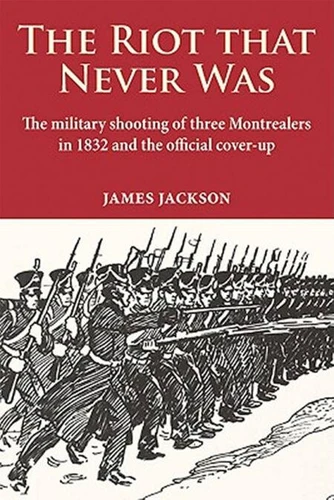
Riot that Never Was, The. The military shooting of three Montrealers in 1832 and the official cover-up
Par :Formats :
Disponible dans votre compte client Decitre ou Furet du Nord dès validation de votre commande. Le format ePub est :
- Compatible avec une lecture sur My Vivlio (smartphone, tablette, ordinateur)
- Compatible avec une lecture sur liseuses Vivlio
- Pour les liseuses autres que Vivlio, vous devez utiliser le logiciel Adobe Digital Edition. Non compatible avec la lecture sur les liseuses Kindle, Remarkable et Sony
 , qui est-ce ?
Notre partenaire de plateforme de lecture numérique où vous retrouverez l'ensemble de vos ebooks gratuitement
Pour en savoir plus sur nos ebooks, consultez notre aide en ligne ici
C'est si simple ! Lisez votre ebook avec l'app Vivlio sur votre tablette, mobile ou ordinateur :

- Nombre de pages359
- FormatePub
- ISBN978-1-926824-16-1
- EAN9781926824161
- Date de parution24/10/2011
- Protection num.Digital Watermarking
- Taille6 Mo
- Infos supplémentairesepub
- ÉditeurBaraka Books
Résumé
A fascinating, methodical investigation into a little-known tragedy shows that truth can prevail even 180 years after the fact. In this "whodunit, " James Jackson is a one-man investigative commission. He meticulously demonstrates how British soldiers shot three innocent bystanders in Old Montreal following a by-election victory of Irish-born Daniel Tracey over Loyalist Stanley Bagg in 1832. He also shows how the political, military, and legal authorities of the time exonerated those responsible for the killings by falsely accusing the supporters of Daniel Tracey, a Patriote Party candidate, of rioting.
Jackson shows that the "riot" simply never happened, but also that history has unfortunately retained the official story of events that help explain the Patriote revolt of 1837-1838. Although the names of those shot that day, Francois Languedoc, Pierre Billet, and Casimir Chauvin, have been forgotten, their story deserves to be known. Jackson combines the rigour and moral indignation of Émile Zola with the writing talent and historical perspective of Pierre Berton.
Jackson shows that the "riot" simply never happened, but also that history has unfortunately retained the official story of events that help explain the Patriote revolt of 1837-1838. Although the names of those shot that day, Francois Languedoc, Pierre Billet, and Casimir Chauvin, have been forgotten, their story deserves to be known. Jackson combines the rigour and moral indignation of Émile Zola with the writing talent and historical perspective of Pierre Berton.