
Chris McManus is Professor of Psychology and Medical Education at University College, London. He is the author of the leading textbook PSYCHOLOGY IN MEDICINE and is the co-editor of THE CAMBRIDGE HANDBOOK OF PSYCHOLOGY, HEALTH AND MEDICINE. He is one of the world's foremost experts on handedness and lateralization.
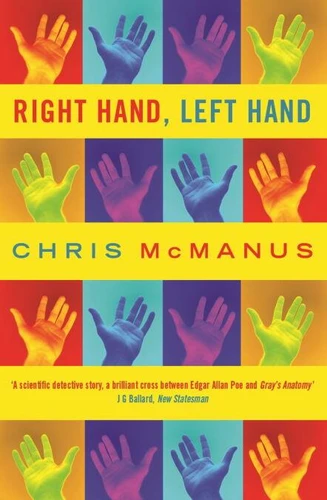
Right Hand, Left Hand. The multiple award-winning true life scientific detective story
Par :Formats :
Disponible dans votre compte client Decitre ou Furet du Nord dès validation de votre commande. Le format ePub protégé est :
- Compatible avec une lecture sur My Vivlio (smartphone, tablette, ordinateur)
- Compatible avec une lecture sur liseuses Vivlio
- Pour les liseuses autres que Vivlio, vous devez utiliser le logiciel Adobe Digital Edition. Non compatible avec la lecture sur les liseuses Kindle, Remarkable et Sony
- Non compatible avec un achat hors France métropolitaine
 , qui est-ce ?
Notre partenaire de plateforme de lecture numérique où vous retrouverez l'ensemble de vos ebooks gratuitement
Pour en savoir plus sur nos ebooks, consultez notre aide en ligne ici
C'est si simple ! Lisez votre ebook avec l'app Vivlio sur votre tablette, mobile ou ordinateur :

- Nombre de pages480
- FormatePub
- ISBN978-1-78022-671-2
- EAN9781780226712
- Date de parution24/07/2013
- Protection num.Adobe DRM
- Infos supplémentairesepub
- ÉditeurWeidenfeld & Nicolson
Résumé
Winner of the Aventis Science Book Prize. 'A scientific detective story, a brilliant cross between Edgar Allan Poe and Gray's anatomy' J G Ballard, New Stateman Books of the Year'Fascinating' New Scientist'Wonderful' Nature- What is the connection between Paul McCartney, Leonardo Da Vinci and Babe Ruth?- Why are parrots and peacocks left-footed?- Do left-handers behave differently from right-handers?- Why are most people right-handed?- Why are all muppets left-handed?- Why is the heart on the left-hand side of the body?- Why is each side of the human brain so different?RIGHT HAND, LEFT HAND uses sources as diverse as the paintings of Rembrandt and the sculpture of Michelangelo, the behaviour of Canadian cichlid fish and the story of early cartography.
Modern cognitive science, the history of the Wimbledon tennis championship and the biographies of great musicians are also used to explain the vast repertoire of 'left-right' symbolism that permeates our everyday lives.
Modern cognitive science, the history of the Wimbledon tennis championship and the biographies of great musicians are also used to explain the vast repertoire of 'left-right' symbolism that permeates our everyday lives.