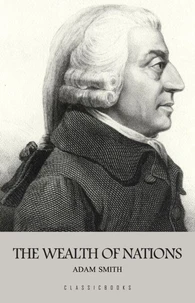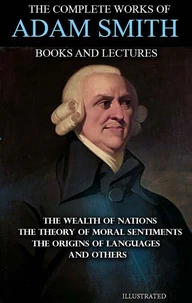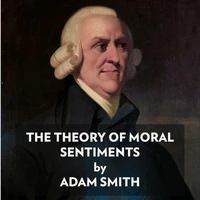



Adam Smith FRSE (baptised June 5, 1723 O. S. / June 16 N. S. - July 17, 1790) was a Scottish moral philosopher and a pioneering political economist. He is also the founder of economics. One of the key figures of the intellectual movement known as the Scottish Enlightenment, he is known primarily as the author of two treatises: The Theory of Moral Sentiments (1759), and An Inquiry into the Nature and Causes of the Wealth of Nations (1776).
The latter was one of the earliest attempts to systematically study the historical development of industry and commerce in Europe, as well as a sustained attack on the doctrines of mercantilism. Smith's work helped to create the modern academic discipline of economics and provided one of the best-known intellectual rationales for free trade, capitalism, and libertarianism. Adam Smith is now depicted on the back of the Bank of England £20 note. The productivity of free exchange: Smith showed that this vast 'mercantilist' edifice was folly.
He argued that in a free exchange, both sides became better off. Quite simply, nobody would trade if they expected to lose from it. The buyer profits, just as the seller does. Imports are just as valuable to us as our exports are to others. Because trade benefits both sides, said Smith, it increases our prosperity just as surely as do agriculture or manufacture. A nation's wealth is not the quantity of gold and silver in its vaults, but the total of its production and commerce - what today we would call gross national product.
The Wealth of Nations deeply influenced the politicians of the time and provided the intellectual foundation of the great nineteenth-century era of free trade and economic expansion. Even today the common sense of free trade is accepted worldwide, whatever the practical difficulties of achieving it. Social order based on freedom: Smith had a radical, fresh understanding of how human societies actually work.
He realised that social harmony would emerge naturally as human beings struggled to find ways to live and work with each other. Freedom and self-interest need not produce chaos, but - as if guided by an 'invisible hand' - order and concord. And as people struck bargains with each other, the nation's resources would be drawn automatically to the ends and purposes that people valued most highly. So a prospering social order did not need to be controlled by kings and ministers.
It would grow, organically, as a product of human nature. It would grow best in an open, competitive marketplace, with free exchange and without coercion. The Wealth Of Nations was therefore not just a study of economics but a survey of human social psychology: about life, welfare, political institutions, the law, and morality. The psychology of ethics: It was not The Wealth Of Nations which first made Smith's reputation, but a book on ethics, The Theory Of Moral Sentiments.
Once again, Smith looks to social psychology to discover the foundation of human morality. Human beings have a natural 'sympathy' for others. That enables them to understand how to moderate their behaviour and preserve harmony. And this is the basis of our moral ideas and moral actions.
The latter was one of the earliest attempts to systematically study the historical development of industry and commerce in Europe, as well as a sustained attack on the doctrines of mercantilism. Smith's work helped to create the modern academic discipline of economics and provided one of the best-known intellectual rationales for free trade, capitalism, and libertarianism. Adam Smith is now depicted on the back of the Bank of England £20 note. The productivity of free exchange: Smith showed that this vast 'mercantilist' edifice was folly.
He argued that in a free exchange, both sides became better off. Quite simply, nobody would trade if they expected to lose from it. The buyer profits, just as the seller does. Imports are just as valuable to us as our exports are to others. Because trade benefits both sides, said Smith, it increases our prosperity just as surely as do agriculture or manufacture. A nation's wealth is not the quantity of gold and silver in its vaults, but the total of its production and commerce - what today we would call gross national product.
The Wealth of Nations deeply influenced the politicians of the time and provided the intellectual foundation of the great nineteenth-century era of free trade and economic expansion. Even today the common sense of free trade is accepted worldwide, whatever the practical difficulties of achieving it. Social order based on freedom: Smith had a radical, fresh understanding of how human societies actually work.
He realised that social harmony would emerge naturally as human beings struggled to find ways to live and work with each other. Freedom and self-interest need not produce chaos, but - as if guided by an 'invisible hand' - order and concord. And as people struck bargains with each other, the nation's resources would be drawn automatically to the ends and purposes that people valued most highly. So a prospering social order did not need to be controlled by kings and ministers.
It would grow, organically, as a product of human nature. It would grow best in an open, competitive marketplace, with free exchange and without coercion. The Wealth Of Nations was therefore not just a study of economics but a survey of human social psychology: about life, welfare, political institutions, the law, and morality. The psychology of ethics: It was not The Wealth Of Nations which first made Smith's reputation, but a book on ethics, The Theory Of Moral Sentiments.
Once again, Smith looks to social psychology to discover the foundation of human morality. Human beings have a natural 'sympathy' for others. That enables them to understand how to moderate their behaviour and preserve harmony. And this is the basis of our moral ideas and moral actions.