Despite the fact that Russian Mennonites began arriving in Canada en masse in the 1870s, Mennonite Canadian literature has been marked by a compulsive retelling of the mass migration of some 20, 000 Russian Mennonites to Canada following the collapse of the "Mennonite Commonwealth" in the 1920s. This privileging of a seminal dispersal within the community's broader history reveals the ways in which the 1920s narrative has come to function as an origin story, or "break event, " for the Russian Mennonites in Canada, serving to affirm a communal identity across national and generational boundaries.
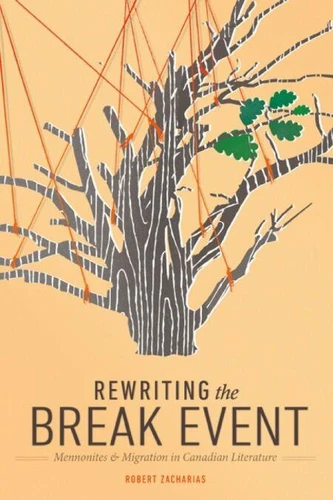
Drawing on recent work in diaspora studies, Rewriting the Break Event offers a historicization of Mennonite literary studies in Canada, followed by close readings of five novels that rewrite the Mennonite break event through specific strains of emphasis, including a religious narrative, ethnic narrative, trauma narrative, and meta-narrative. The result is thoughtful and engaging exploration of the shifting contours of Mennonite collective identity, and an exciting new methodology that promises to resituate the discourse of migrant writing in Canada.
Despite the fact that Russian Mennonites began arriving in Canada en masse in the 1870s, Mennonite Canadian literature has been marked by a compulsive retelling of the mass migration of some 20, 000 Russian Mennonites to Canada following the collapse of the "Mennonite Commonwealth" in the 1920s. This privileging of a seminal dispersal within the community's broader history reveals the ways in which the 1920s narrative has come to function as an origin story, or "break event, " for the Russian Mennonites in Canada, serving to affirm a communal identity across national and generational boundaries.
Drawing on recent work in diaspora studies, Rewriting the Break Event offers a historicization of Mennonite literary studies in Canada, followed by close readings of five novels that rewrite the Mennonite break event through specific strains of emphasis, including a religious narrative, ethnic narrative, trauma narrative, and meta-narrative. The result is thoughtful and engaging exploration of the shifting contours of Mennonite collective identity, and an exciting new methodology that promises to resituate the discourse of migrant writing in Canada.

 , qui est-ce ?
