
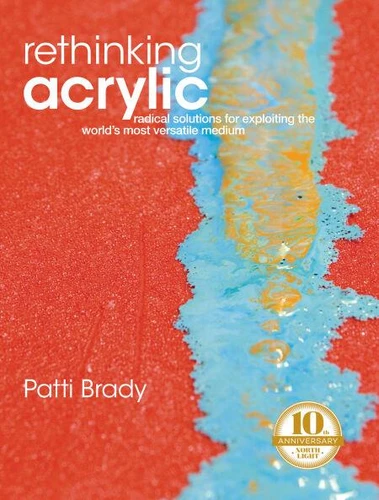
Rethinking Acrylic. Radical Solutions For Exploiting The World's Most Versatile Medium
Par :Formats :
Disponible dans votre compte client Decitre ou Furet du Nord dès validation de votre commande. Le format ePub protégé est :
- Compatible avec une lecture sur My Vivlio (smartphone, tablette, ordinateur)
- Compatible avec une lecture sur liseuses Vivlio
- Pour les liseuses autres que Vivlio, vous devez utiliser le logiciel Adobe Digital Edition. Non compatible avec la lecture sur les liseuses Kindle, Remarkable et Sony
- Non compatible avec un achat hors France métropolitaine
 , qui est-ce ?
Notre partenaire de plateforme de lecture numérique où vous retrouverez l'ensemble de vos ebooks gratuitement
Pour en savoir plus sur nos ebooks, consultez notre aide en ligne ici
C'est si simple ! Lisez votre ebook avec l'app Vivlio sur votre tablette, mobile ou ordinateur :

- Nombre de pages160
- FormatePub
- ISBN978-1-4403-1977-8
- EAN9781440319778
- Date de parution01/12/2008
- Protection num.Adobe DRM
- Taille118 Mo
- Infos supplémentairesepub
- ÉditeurNorth Light Books
Résumé
Have you ever walked into an art supply store, stood in front of the amazing array of acrylic products and just thrown up your hands in confusion, leaving the store without buying something new to experiment with? If you've ever wondered what to do with all those products, then this book is for you. If you've been using acrylic in traditional painting forms, in this book you'll find grand, wild and inventive manipulations of acrylic that will get your creative juices flowing.
Compared to more traditional art mediums such as oil and watercolor, acrylic is still in its infancy. But what it lacks in years, it makes up for in its range of use. Acrylics appeared on the market for artists in the late 1940s as a quick-drying alternative to oil paint. In its early manifestations, it dried so quickly that more than a few brushes stuck immediately to the canvas!Although acrylic has been around for more than fifty years, incredible advances continue to be made in the research and development of acrylic polymers and pigments.
These advancements are attributable not only to the efforts of a few dedicated chemists, but also to the work of an entire community devoted to acrylic. There are a lot of brilliant minds taking these minute molecules very seriously.
Compared to more traditional art mediums such as oil and watercolor, acrylic is still in its infancy. But what it lacks in years, it makes up for in its range of use. Acrylics appeared on the market for artists in the late 1940s as a quick-drying alternative to oil paint. In its early manifestations, it dried so quickly that more than a few brushes stuck immediately to the canvas!Although acrylic has been around for more than fifty years, incredible advances continue to be made in the research and development of acrylic polymers and pigments.
These advancements are attributable not only to the efforts of a few dedicated chemists, but also to the work of an entire community devoted to acrylic. There are a lot of brilliant minds taking these minute molecules very seriously.