SOLDES
Jusqu'à -70% sur une sélection d'articles*

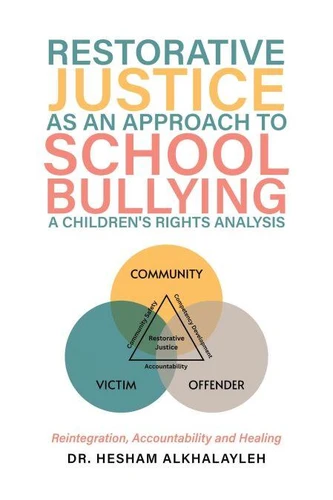
Restorative Justice As an Approach to School Bullying a Children's Rights Analysis: Reintegration, Accountability and Healing
Par :Formats :
Disponible dans votre compte client Decitre ou Furet du Nord dès validation de votre commande. Le format ePub est :
- Compatible avec une lecture sur My Vivlio (smartphone, tablette, ordinateur)
- Compatible avec une lecture sur liseuses Vivlio
- Pour les liseuses autres que Vivlio, vous devez utiliser le logiciel Adobe Digital Edition. Non compatible avec la lecture sur les liseuses Kindle, Remarkable et Sony
 , qui est-ce ?
Notre partenaire de plateforme de lecture numérique où vous retrouverez l'ensemble de vos ebooks gratuitement
Pour en savoir plus sur nos ebooks, consultez notre aide en ligne ici
C'est si simple ! Lisez votre ebook avec l'app Vivlio sur votre tablette, mobile ou ordinateur :

- FormatePub
- ISBN978-1-83418-868-3
- EAN9781834188683
- Date de parution12/10/2025
- Protection num.pas de protection
- Infos supplémentairesepub
- ÉditeurTellwell Talent
Résumé
Restorative Justice as an Approach to School Bullying offers a groundbreaking exploration of how restorative approaches can transform the way schools address one of their most persistent challenges: bullying. Moving beyond punitive measures, this book presents restorative justice as a holistic framework that emphasizes accountability, reintegration, and healing for all those affected. Drawing on practical insights and real-world examples, the book demonstrates how restorative practices empower students to take responsibility for their actions while giving victims a voice in the process.
Rather than isolating or stigmatizing those who cause harm, restorative justice seeks to reintegrate them into the school community through dialogue, empathy, and mutual understanding. This approach fosters meaningful accountability, where students acknowledge the impact of their behavior and actively work to repair the damage caused. At its core, the book highlights how restorative justice creates opportunities for healing, not only for the individuals directly involved in bullying incidents but also for the wider school community.
By building trust, promoting respect, and nurturing positive relationships, restorative practices contribute to safer, more inclusive, and supportive learning environments. This work is both a guide and a call to action for educators, policymakers, and school leaders seeking alternatives to zero-tolerance policies. It makes a compelling case for adopting restorative justice as a proactive and sustainable strategy to address bullying and cultivate resilience in schools.
Rather than isolating or stigmatizing those who cause harm, restorative justice seeks to reintegrate them into the school community through dialogue, empathy, and mutual understanding. This approach fosters meaningful accountability, where students acknowledge the impact of their behavior and actively work to repair the damage caused. At its core, the book highlights how restorative justice creates opportunities for healing, not only for the individuals directly involved in bullying incidents but also for the wider school community.
By building trust, promoting respect, and nurturing positive relationships, restorative practices contribute to safer, more inclusive, and supportive learning environments. This work is both a guide and a call to action for educators, policymakers, and school leaders seeking alternatives to zero-tolerance policies. It makes a compelling case for adopting restorative justice as a proactive and sustainable strategy to address bullying and cultivate resilience in schools.