SOLDES
Jusqu'à -70% sur une sélection d'articles*

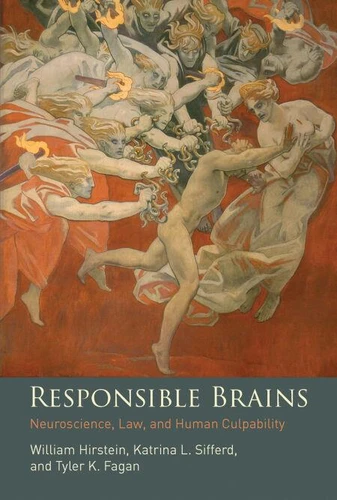
Responsible Brains. Neuroscience, Law, and Human Culpability
Par : , ,Formats :
Disponible dans votre compte client Decitre ou Furet du Nord dès validation de votre commande. Le format ePub protégé est :
- Compatible avec une lecture sur My Vivlio (smartphone, tablette, ordinateur)
- Compatible avec une lecture sur liseuses Vivlio
- Pour les liseuses autres que Vivlio, vous devez utiliser le logiciel Adobe Digital Edition. Non compatible avec la lecture sur les liseuses Kindle, Remarkable et Sony
- Non compatible avec un achat hors France métropolitaine
 , qui est-ce ?
Notre partenaire de plateforme de lecture numérique où vous retrouverez l'ensemble de vos ebooks gratuitement
Pour en savoir plus sur nos ebooks, consultez notre aide en ligne ici
C'est si simple ! Lisez votre ebook avec l'app Vivlio sur votre tablette, mobile ou ordinateur :

- Nombre de pages304
- FormatePub
- ISBN978-0-262-34928-4
- EAN9780262349284
- Date de parution04/12/2018
- Protection num.Adobe DRM
- Taille652 Ko
- Infos supplémentairesepub
- ÉditeurThe MIT Press
Résumé
An examination of the relationship between the brain and culpability that offers a comprehensive neuroscientific theory of human responsibility. When we praise, blame, punish, or reward people for their actions, we are holding them responsible for what they have done. Common sense tells us that what makes human beings responsible has to do with their minds and, in particular, the relationship between their minds and their actions.
Yet the empirical connection is not necessarily obvious. The "guilty mind" is a core concept of criminal law, but if a defendant on trial for murder were found to have serious brain damage, which brain parts or processes would have to be damaged for him to be considered not responsible, or less responsible, for the crime? What mental illnesses would justify legal pleas of insanity? In Responsible Brains, philosophers William Hirstein, Katrina Sifferd, and Tyler Fagan examine recent developments in neuroscience that point to neural mechanisms of responsibility.
Drawing on this research, they argue that evidence from neuroscience and cognitive science can illuminate and inform the nature of responsibility and agency. They go on to offer a novel and comprehensive neuroscientific theory of human responsibility. The authors' core hypothesis is that responsibility is grounded in the brain's prefrontal executive processes, which enable us to make plans, shift attention, inhibit actions, and more.
The authors develop the executive theory of responsibility and discuss its implications for criminal law. Their theory neatly bridges the folk-psychological concepts of the law and neuroscientific findings.
Yet the empirical connection is not necessarily obvious. The "guilty mind" is a core concept of criminal law, but if a defendant on trial for murder were found to have serious brain damage, which brain parts or processes would have to be damaged for him to be considered not responsible, or less responsible, for the crime? What mental illnesses would justify legal pleas of insanity? In Responsible Brains, philosophers William Hirstein, Katrina Sifferd, and Tyler Fagan examine recent developments in neuroscience that point to neural mechanisms of responsibility.
Drawing on this research, they argue that evidence from neuroscience and cognitive science can illuminate and inform the nature of responsibility and agency. They go on to offer a novel and comprehensive neuroscientific theory of human responsibility. The authors' core hypothesis is that responsibility is grounded in the brain's prefrontal executive processes, which enable us to make plans, shift attention, inhibit actions, and more.
The authors develop the executive theory of responsibility and discuss its implications for criminal law. Their theory neatly bridges the folk-psychological concepts of the law and neuroscientific findings.