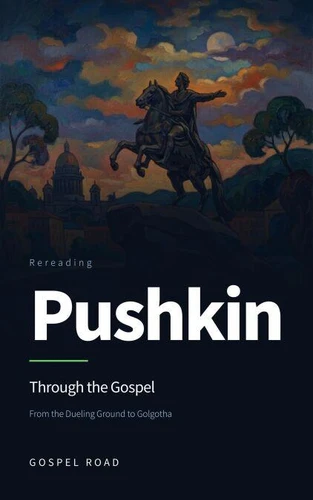
Russians call him the sun of their poetry. English readers mostly know him as a name on a spine. Pushkin read Voltaire as a schoolboy, kept a list of the women he had loved, and died at thirty-seven with a bullet in his stomach after a duel over gossip about his wife. And in his stories, nobody is saved. Onegin has everything and yawns. Hermann ends in room 17 of an asylum, muttering three cards. Yevgeny dies on the threshold of a ruined house, and no one ever learns his name.
Pushkin draws the human problem with terrible accuracy, declines to solve it, and takes his hands away. Which makes him, for a Christian reader, a rare opportunity - because a story with the answer already inside it does not hand the question back. This book stands in front of the eight doors he left open. Is boredom a sin? Why does a moralist turn into an occultist so easily? What is the difference between shaking your fist at God and losing your mind? Why does grace always look like waste?Reading Eugene Onegin, The Captain's Daughter, The Queen of Spades, The Bronze Horseman and two late poems through the theology of Timothy Keller, John Stott, Alister McGrath, N.
T. Wright and John Piper, it refuses to smuggle in an answer Pushkin never wrote. It marks the empty place instead, and looks at its shape. Includes an eight-week course for reading groups.
Russians call him the sun of their poetry. English readers mostly know him as a name on a spine. Pushkin read Voltaire as a schoolboy, kept a list of the women he had loved, and died at thirty-seven with a bullet in his stomach after a duel over gossip about his wife. And in his stories, nobody is saved. Onegin has everything and yawns. Hermann ends in room 17 of an asylum, muttering three cards. Yevgeny dies on the threshold of a ruined house, and no one ever learns his name.
Pushkin draws the human problem with terrible accuracy, declines to solve it, and takes his hands away. Which makes him, for a Christian reader, a rare opportunity - because a story with the answer already inside it does not hand the question back. This book stands in front of the eight doors he left open. Is boredom a sin? Why does a moralist turn into an occultist so easily? What is the difference between shaking your fist at God and losing your mind? Why does grace always look like waste?Reading Eugene Onegin, The Captain's Daughter, The Queen of Spades, The Bronze Horseman and two late poems through the theology of Timothy Keller, John Stott, Alister McGrath, N.
T. Wright and John Piper, it refuses to smuggle in an answer Pushkin never wrote. It marks the empty place instead, and looks at its shape. Includes an eight-week course for reading groups.

 , qui est-ce ?