SOLDES
Jusqu'à -70% sur une sélection d'articles*

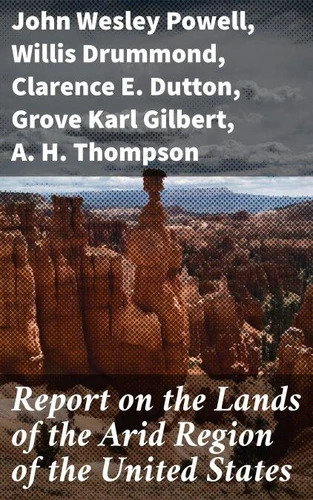
Report on the Lands of the Arid Region of the United States. With a More Detailed Account of the Lands of Utah
Par : , , , ,Formats :
Disponible dans votre compte client Decitre ou Furet du Nord dès validation de votre commande. Le format ePub est :
- Compatible avec une lecture sur My Vivlio (smartphone, tablette, ordinateur)
- Compatible avec une lecture sur liseuses Vivlio
- Pour les liseuses autres que Vivlio, vous devez utiliser le logiciel Adobe Digital Edition. Non compatible avec la lecture sur les liseuses Kindle, Remarkable et Sony
 , qui est-ce ?
Notre partenaire de plateforme de lecture numérique où vous retrouverez l'ensemble de vos ebooks gratuitement
Pour en savoir plus sur nos ebooks, consultez notre aide en ligne ici
C'est si simple ! Lisez votre ebook avec l'app Vivlio sur votre tablette, mobile ou ordinateur :

- Nombre de pages201
- FormatePub
- ISBN406-633--954546-5
- EAN4066339545465
- Date de parution10/07/2023
- Protection num.Digital Watermarking
- Taille2 Mo
- Infos supplémentairesepub
- ÉditeurGOOD PRESS
Résumé
The 'Report on the Lands of the Arid Region of the United States' brings together a crucial collection of scientific and exploratory essays that delve into the transformative landscape of America's dry regions during the late 19th century. This anthology explores themes of water scarcity, environmental transformation, and the socio-economic implications of managing arid lands. The diversity of essays underscores a blend of cartography, geology, and pioneering land reform ideas, seamlessly weaving scientific rigour with visionary land policy discussions.
These pieces collectively highlight crucial debates and observations pertaining to the development and sustainability of arid regions, with a standout focus on water resource management and its critical importance. Within this collection, remarkable scholars such as John Wesley Powell and Willis Drummond contribute their roles as prominent figures in advancing land reform and conservation ideologies.
These authors, alongside pioneers like Clarence E. Dutton, Grove Karl Gilbert, and A. H. Thompson, offer a multifaceted view rooted in the scientific inquiry and explorative zeal characteristic of the era. Their collective insight represents a shifting American perspective influenced by westward expansion and resource management, aligning with historical movements advocating for more sustainable and scientifically-informed policies.
This anthology is a vital resource for anyone interested in understanding the varied and historical perspectives on land and water management. Readers are invited to explore a vast array of insights that not only trace the scientific and cultural advancements of the time but also foster a deeper dialogue on our current environmental challenges. As a compendium of diverse voices, it offers a rich, educational journey through America's ecological and developmental narrative.
These pieces collectively highlight crucial debates and observations pertaining to the development and sustainability of arid regions, with a standout focus on water resource management and its critical importance. Within this collection, remarkable scholars such as John Wesley Powell and Willis Drummond contribute their roles as prominent figures in advancing land reform and conservation ideologies.
These authors, alongside pioneers like Clarence E. Dutton, Grove Karl Gilbert, and A. H. Thompson, offer a multifaceted view rooted in the scientific inquiry and explorative zeal characteristic of the era. Their collective insight represents a shifting American perspective influenced by westward expansion and resource management, aligning with historical movements advocating for more sustainable and scientifically-informed policies.
This anthology is a vital resource for anyone interested in understanding the varied and historical perspectives on land and water management. Readers are invited to explore a vast array of insights that not only trace the scientific and cultural advancements of the time but also foster a deeper dialogue on our current environmental challenges. As a compendium of diverse voices, it offers a rich, educational journey through America's ecological and developmental narrative.
A propos de John Wesley Powell


0,99 €