SOLDES
Jusqu'à -70% sur une sélection d'articles*

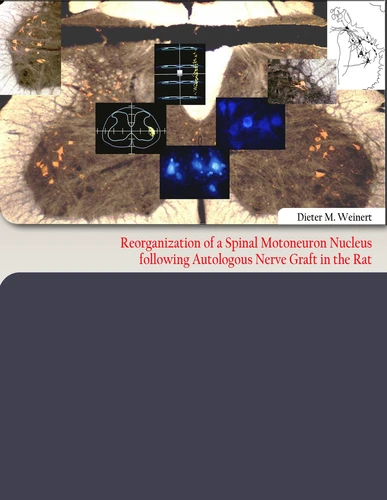
Reorganization of a Spinal Motoneuron Nucleus following Autologous Nerve Graft in the Rat
Par :Formats :
Disponible dans votre compte client Decitre ou Furet du Nord dès validation de votre commande. Le format ePub est :
- Compatible avec une lecture sur My Vivlio (smartphone, tablette, ordinateur)
- Compatible avec une lecture sur liseuses Vivlio
- Pour les liseuses autres que Vivlio, vous devez utiliser le logiciel Adobe Digital Edition. Non compatible avec la lecture sur les liseuses Kindle, Remarkable et Sony
 , qui est-ce ?
Notre partenaire de plateforme de lecture numérique où vous retrouverez l'ensemble de vos ebooks gratuitement
Pour en savoir plus sur nos ebooks, consultez notre aide en ligne ici
C'est si simple ! Lisez votre ebook avec l'app Vivlio sur votre tablette, mobile ou ordinateur :

- Nombre de pages184
- FormatePub
- ISBN978-3-7412-3497-2
- EAN9783741234972
- Date de parution19/05/2016
- Protection num.Digital Watermarking
- Taille27 Mo
- Infos supplémentairesepub
- ÉditeurBooks on Demand
Résumé
Autologous nerve grafts are steadily regarded as the method of choice for bridging the nerve gaps resulting after peripheral nerve lesions with substance defects. Microsurgical techniques and the perineurial suture of corresponding fascicles have improved the functional results following peripheral nerve graft.
However, regeneration success is often disappointing, despite the most thorough technique and expertise.
The loss of spinal motoneurons associated with a nerve lesion and the growth of axon sprouts in inadequate endoneurial sheaths were held responsible as the reason for the lowered muscular strength, limited movement coordination and fine motor skills, poor differentiation and localization of sensory stimuli and for the lack of tactile gnosis. In this experimental study, it is assumed that the central effects at the level of the spinal motoneuron nuclei show an image of the peripheral misinnervation in topographical-morphological terms, and can supply an explanatory model for the functional motor deficits after peripheral nerve graft. On the other hand, the plastic changes of a motor cell column in the reinnervation process influence the structural-functional relationships of the motor units in a variety of clinically relevant ways.
The loss of spinal motoneurons associated with a nerve lesion and the growth of axon sprouts in inadequate endoneurial sheaths were held responsible as the reason for the lowered muscular strength, limited movement coordination and fine motor skills, poor differentiation and localization of sensory stimuli and for the lack of tactile gnosis. In this experimental study, it is assumed that the central effects at the level of the spinal motoneuron nuclei show an image of the peripheral misinnervation in topographical-morphological terms, and can supply an explanatory model for the functional motor deficits after peripheral nerve graft. On the other hand, the plastic changes of a motor cell column in the reinnervation process influence the structural-functional relationships of the motor units in a variety of clinically relevant ways.