John Dominic Crossan, professor emeritus at DePaul University, is widely regarded as the foremost historical Jesus scholar of our time. He is the author of several bestselling books, including The Historical Jesus, How to Read the Bible and Still Be a Christian, God and Empire, Jesus: A Revolutionary Biography, The Greatest Prayer, The Last Week, and The Power of Parable. He lives in Minneola, Florida.
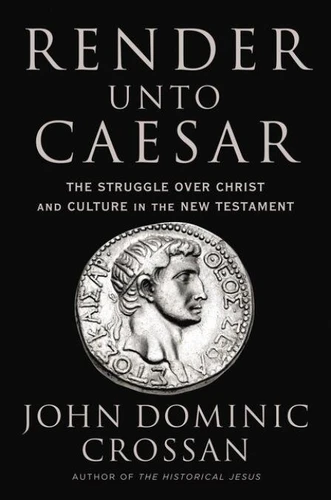
Render Unto Caesar. The Struggle Over Christ and Culture in the New Testament
Par :Formats :
Disponible dans votre compte client Decitre ou Furet du Nord dès validation de votre commande. Le format ePub protégé est :
- Compatible avec une lecture sur My Vivlio (smartphone, tablette, ordinateur)
- Compatible avec une lecture sur liseuses Vivlio
- Pour les liseuses autres que Vivlio, vous devez utiliser le logiciel Adobe Digital Edition. Non compatible avec la lecture sur les liseuses Kindle, Remarkable et Sony
- Non compatible avec un achat hors France métropolitaine
 , qui est-ce ?
Notre partenaire de plateforme de lecture numérique où vous retrouverez l'ensemble de vos ebooks gratuitement
Pour en savoir plus sur nos ebooks, consultez notre aide en ligne ici
C'est si simple ! Lisez votre ebook avec l'app Vivlio sur votre tablette, mobile ou ordinateur :

- Nombre de pages256
- FormatePub
- ISBN978-0-06-296496-0
- EAN9780062964960
- Date de parution29/03/2022
- Protection num.Adobe DRM
- Infos supplémentairesepub
- ÉditeurHarperOne
Résumé
The revered Bible scholar and author of The Historical Jesus explores the Christian culture wars-the debates over church and state-from a biblical perspective, exploring the earliest tensions evident in the New Testament, and offering a way forward for Christians today. Leading Bible scholar John Dominic Crossan, the author of the pioneering work The Historical Jesus, provides new insight into the Christian culture wars which began in the New Testament and persist strongly today.
For decades, Americans have been divided on how Christians should relate to government and lawmakers, a dispute that has impacted every area of society and grown more rancorous over the past forty years. But as Crossan makes clear, this debate isn't new; it can be found in the New Testament itself, most notably in the tensions between Luke-Acts and Revelation. In the texts of Luke-Acts, Rome is considered favorably.
In the book of Revelation, Rome is seen as the embodiment of evil in the world. Yet there is an alternative to these two extremes, Crossan explains. The historical Jesus and Paul, the earliest Christian teachers, were both strongly opposed to Rome, yet neither demonized the Empire. Crossan sees in Jesus and Paul's approach a model for Christians today that can be used to cut through the acrimony and polarization roiling our society and dividing us.
Based on a lifetime of scholarship, this study of early Christianity offers a vital framework for understanding the intersection of faith and power: Church and State: An exploration of the biblical roots of the Christian culture wars, tracing the debate back to the very pages of the New Testament. Two Competing Visions: A deep dive into how Luke-Acts presents a favorable view of the Roman Empire, while the book of Revelation demonizes it as the embodiment of evil.
Jesus and Paul's Alternative: How the earliest Christian teachers forged a model of nonviolent resistance that confronted Rome without resorting to demonization. A Model for Today: A compelling argument for how this ancient, nuanced approach to political engagement offers a path through the polarization dividing contemporary society.
For decades, Americans have been divided on how Christians should relate to government and lawmakers, a dispute that has impacted every area of society and grown more rancorous over the past forty years. But as Crossan makes clear, this debate isn't new; it can be found in the New Testament itself, most notably in the tensions between Luke-Acts and Revelation. In the texts of Luke-Acts, Rome is considered favorably.
In the book of Revelation, Rome is seen as the embodiment of evil in the world. Yet there is an alternative to these two extremes, Crossan explains. The historical Jesus and Paul, the earliest Christian teachers, were both strongly opposed to Rome, yet neither demonized the Empire. Crossan sees in Jesus and Paul's approach a model for Christians today that can be used to cut through the acrimony and polarization roiling our society and dividing us.
Based on a lifetime of scholarship, this study of early Christianity offers a vital framework for understanding the intersection of faith and power: Church and State: An exploration of the biblical roots of the Christian culture wars, tracing the debate back to the very pages of the New Testament. Two Competing Visions: A deep dive into how Luke-Acts presents a favorable view of the Roman Empire, while the book of Revelation demonizes it as the embodiment of evil.
Jesus and Paul's Alternative: How the earliest Christian teachers forged a model of nonviolent resistance that confronted Rome without resorting to demonization. A Model for Today: A compelling argument for how this ancient, nuanced approach to political engagement offers a path through the polarization dividing contemporary society.
A propos de John Dominic Crossan
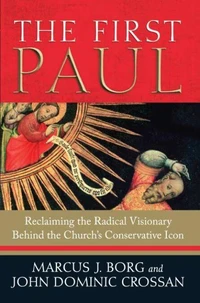
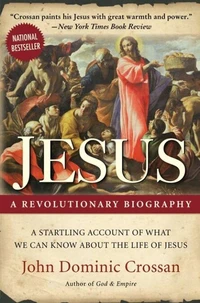
9,99 €
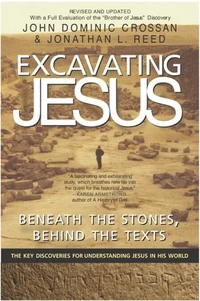
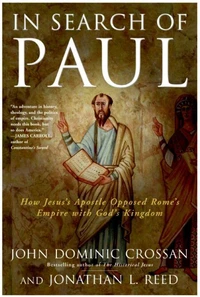
8,99 €