SOLDES
Jusqu'à -70% sur une sélection d'articles*

Nouveauté
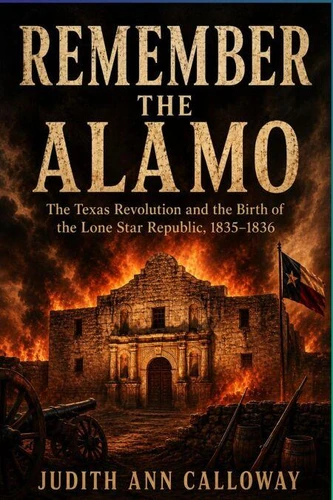
Remember The Alamo. The Texas Revolution and the Birth of the Lone Star Republic, 1835-1836
Par :Formats :
Disponible dans votre compte client Decitre ou Furet du Nord dès validation de votre commande. Le format ePub est :
- Compatible avec une lecture sur My Vivlio (smartphone, tablette, ordinateur)
- Compatible avec une lecture sur liseuses Vivlio
- Pour les liseuses autres que Vivlio, vous devez utiliser le logiciel Adobe Digital Edition. Non compatible avec la lecture sur les liseuses Kindle, Remarkable et Sony
 , qui est-ce ?
Notre partenaire de plateforme de lecture numérique où vous retrouverez l'ensemble de vos ebooks gratuitement
Pour en savoir plus sur nos ebooks, consultez notre aide en ligne ici
C'est si simple ! Lisez votre ebook avec l'app Vivlio sur votre tablette, mobile ou ordinateur :

- FormatePub
- ISBN8905168536
- EAN9798905168536
- Date de parution02/06/2026
- Protection num.pas de protection
- Taille1 Mo
- Infos supplémentairesepub
- ÉditeurChiify
Résumé
Texas Revolution history - the Alamo, Sam Houston, Santa Anna, and the thirteen-day siege that made the Lone Star Republic, 1835-1836. Narrative American military history.
On October 2, 1835, settlers in Gonzales hoisted a homemade flag bearing a brass cannon and four words - COME AND TAKE IT - and opened fire on Mexican troops sent to disarm them. The shot was militarily inconsequential. What it started was not.
Within six months, fewer than two hundred men had died inside a crumbling Spanish mission in San Antonio, Sam Houston's army had destroyed Santa Anna's forces in eighteen minutes at San Jacinto, and a new republic had been born from one of the most contested revolutions in North American history. Historian Judith Ann Calloway traces the full arc from Stephen F. Austin's colonization - twenty thousand Anglo settlers in Mexican Texas on land grants at a quarter of a cent per acre - through the thirteen-day Alamo siege, the Goliad massacre of more than four hundred prisoners, and the eighteen-minute battle that secured Texas independence.
Jim Bowie, William Barret Travis, Davy Crockett, Juan Seguin, the Tejano defenders, and the enslaved people whose futures hung on the outcome all take their place in a story that refuses to flatten into simple heroism. Inside this Texas Revolution history: The Gonzales cannon - how a small brass cannon lent for protection against raids sparked a continental revolution (Chapter 4) The thirteen-day Alamo siege - Travis's "Victory or Death" letter of February 24, 1836, and the predawn assault of March 6 that killed every defender (Chapters 5-7) The garrison's real men - Travis at twenty-six, Bowie ill on his cot, Crockett arriving as a private adventurer - and why the de la Pena diary still divides historians (Chapter 6) The Goliad massacre - Santa Anna's order to execute more than four hundred prisoners and the battle cries it created for San Jacinto (Chapter 10) Eighteen minutes at San Jacinto - how Houston's volunteers destroyed Santa Anna's force and captured the general himself (Chapter 13) The Tejanos and the enslaved - the revolution's explicit defense of slavery and the broken promises that followed independence (Chapters 19-20) The Alamo's contested memory - the curved facade added in 1850, the Daughters of the Republic of Texas, and the ongoing fight over whose story the shrine tells (Chapters 21, 23) Texas Revolution history that honors the Alamo's defenders while honestly examining their cause - a stand against tyranny that was also a defense of slavery, a heroic last stand that culminated a decade of calculated demographic advance into Mexican territory. For readers of S.
C. Gwynne's EMPIRE OF THE SUMMER MOON and David Grann's KILLERS OF THE FLOWER MOON.
Within six months, fewer than two hundred men had died inside a crumbling Spanish mission in San Antonio, Sam Houston's army had destroyed Santa Anna's forces in eighteen minutes at San Jacinto, and a new republic had been born from one of the most contested revolutions in North American history. Historian Judith Ann Calloway traces the full arc from Stephen F. Austin's colonization - twenty thousand Anglo settlers in Mexican Texas on land grants at a quarter of a cent per acre - through the thirteen-day Alamo siege, the Goliad massacre of more than four hundred prisoners, and the eighteen-minute battle that secured Texas independence.
Jim Bowie, William Barret Travis, Davy Crockett, Juan Seguin, the Tejano defenders, and the enslaved people whose futures hung on the outcome all take their place in a story that refuses to flatten into simple heroism. Inside this Texas Revolution history: The Gonzales cannon - how a small brass cannon lent for protection against raids sparked a continental revolution (Chapter 4) The thirteen-day Alamo siege - Travis's "Victory or Death" letter of February 24, 1836, and the predawn assault of March 6 that killed every defender (Chapters 5-7) The garrison's real men - Travis at twenty-six, Bowie ill on his cot, Crockett arriving as a private adventurer - and why the de la Pena diary still divides historians (Chapter 6) The Goliad massacre - Santa Anna's order to execute more than four hundred prisoners and the battle cries it created for San Jacinto (Chapter 10) Eighteen minutes at San Jacinto - how Houston's volunteers destroyed Santa Anna's force and captured the general himself (Chapter 13) The Tejanos and the enslaved - the revolution's explicit defense of slavery and the broken promises that followed independence (Chapters 19-20) The Alamo's contested memory - the curved facade added in 1850, the Daughters of the Republic of Texas, and the ongoing fight over whose story the shrine tells (Chapters 21, 23) Texas Revolution history that honors the Alamo's defenders while honestly examining their cause - a stand against tyranny that was also a defense of slavery, a heroic last stand that culminated a decade of calculated demographic advance into Mexican territory. For readers of S.
C. Gwynne's EMPIRE OF THE SUMMER MOON and David Grann's KILLERS OF THE FLOWER MOON.