SOLDES
Jusqu'à -70% sur une sélection d'articles*

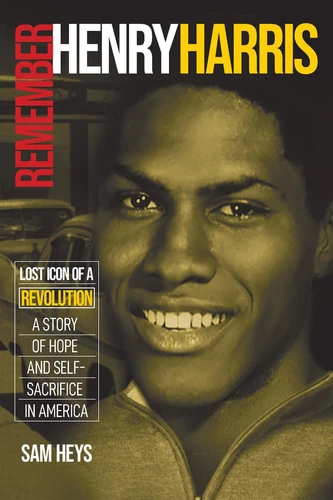
Remember Henry Harris: Lost Icon of a Revolution: A Story of Hope and Self-Sacrifice in America
Par :Formats :
Disponible dans votre compte client Decitre ou Furet du Nord dès validation de votre commande. Le format ePub est :
- Compatible avec une lecture sur My Vivlio (smartphone, tablette, ordinateur)
- Compatible avec une lecture sur liseuses Vivlio
- Pour les liseuses autres que Vivlio, vous devez utiliser le logiciel Adobe Digital Edition. Non compatible avec la lecture sur les liseuses Kindle, Remarkable et Sony
 , qui est-ce ?
Notre partenaire de plateforme de lecture numérique où vous retrouverez l'ensemble de vos ebooks gratuitement
Pour en savoir plus sur nos ebooks, consultez notre aide en ligne ici
C'est si simple ! Lisez votre ebook avec l'app Vivlio sur votre tablette, mobile ou ordinateur :

- FormatePub
- ISBN978-0-578-59204-6
- EAN9780578592046
- Date de parution10/09/2019
- Protection num.pas de protection
- Infos supplémentairesepub
- ÉditeurEditeurs divers USA
Résumé
After the freedom rides ended, after the bus boycotts and sit-ins, the marches and protests, and long after the TV cameras and federal marshals packed up and went home, Henry Harris enrolled at Auburn University, alone in a dormitory of one hundred and fifty white southern males high on testosterone. Harris was the first African American on athletic scholarship at Auburn and, more importantly, the first black athlete at any SEC school in the Deep South.
An exceptional basketball player, he was valedictorian of all-black Greene County Training School in Boligee, Alabama. It was 1968 and the spring Martin Luther King was murdered-only two weeks after speaking at a rally in Greene County. It was an extraordinary time, and Harris decided to make his life matter by going to Auburn. He was the seeming quintessential candidate for integration, but nothing could have prepared him for the next four years.
Fourteen years after Brown v. Board Education, he still had not satin a classroom with a white person. Sam Heys's curiosity about Harris's life deepened the night in 1974 that he ripped an article from a newswire printer and read four paragraphs reporting Harris's suicide at twenty-four. The details were scarce, and the story was missing all the "whys." Heys fills in the facts, answers the questions, and traces Harris's extraordinary passage from an abandoned store in tiny Boligee, Alabama, to a rooftop in Milwaukee, Wisconsin, a journey that helped revolutionize the South and America.
An exceptional basketball player, he was valedictorian of all-black Greene County Training School in Boligee, Alabama. It was 1968 and the spring Martin Luther King was murdered-only two weeks after speaking at a rally in Greene County. It was an extraordinary time, and Harris decided to make his life matter by going to Auburn. He was the seeming quintessential candidate for integration, but nothing could have prepared him for the next four years.
Fourteen years after Brown v. Board Education, he still had not satin a classroom with a white person. Sam Heys's curiosity about Harris's life deepened the night in 1974 that he ripped an article from a newswire printer and read four paragraphs reporting Harris's suicide at twenty-four. The details were scarce, and the story was missing all the "whys." Heys fills in the facts, answers the questions, and traces Harris's extraordinary passage from an abandoned store in tiny Boligee, Alabama, to a rooftop in Milwaukee, Wisconsin, a journey that helped revolutionize the South and America.