SOLDES
Jusqu'à -70% sur une sélection d'articles*

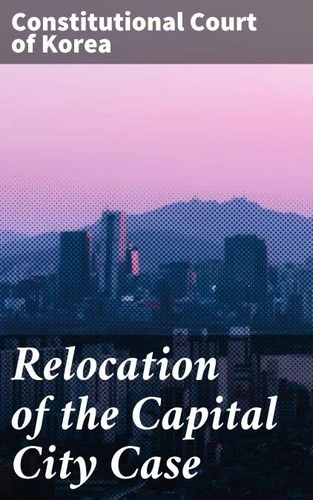
Relocation of the Capital City Case. Navigating Legal, Political, and Urban Complexities in South Korea
Par :Formats :
Disponible dans votre compte client Decitre ou Furet du Nord dès validation de votre commande. Le format ePub est :
- Compatible avec une lecture sur My Vivlio (smartphone, tablette, ordinateur)
- Compatible avec une lecture sur liseuses Vivlio
- Pour les liseuses autres que Vivlio, vous devez utiliser le logiciel Adobe Digital Edition. Non compatible avec la lecture sur les liseuses Kindle, Remarkable et Sony
 , qui est-ce ?
Notre partenaire de plateforme de lecture numérique où vous retrouverez l'ensemble de vos ebooks gratuitement
Pour en savoir plus sur nos ebooks, consultez notre aide en ligne ici
C'est si simple ! Lisez votre ebook avec l'app Vivlio sur votre tablette, mobile ou ordinateur :

- Nombre de pages72
- FormatePub
- ISBN406-4-06-645528-6
- EAN4064066455286
- Date de parution11/04/2021
- Protection num.Digital Watermarking
- Taille463 Ko
- Infos supplémentairesepub
- ÉditeurGOOD PRESS
Résumé
In "Relocation of the Capital City Case, " the Constitutional Court of Korea elucidates the complexities surrounding the contentious debate over relocating South Korea's capital from Seoul to a new city, as proposed in the 2004 administrative reforms. The book meticulously examines the constitutional implications, societal impacts, and legal challenges associated with this monumental decision. Employing a formal and analytical literary style, it integrates case law, constitutional provisions, and comparative studies to contextualize the legal reasoning behind the court's pivotal rulings.
The work stands as an essential contribution to the ongoing discourse on governance and urban planning in a rapidly modernizing society. The Constitutional Court of Korea has played a crucial role in shaping democratic norms and ensuring the rule of law within the nation. The court's unique position allows it to address profound societal issues. This particular case reflects broader themes of national identity, development, and the historical significance of urban centers in South Korea.
The deliberations of the court are indicative of its commitment to balancing innovation with constitutional integrity. This nuanced exploration of a critical national issue makes "Relocation of the Capital City Case" a vital resource for scholars, policymakers, and anyone interested in the interplay between law and society in contemporary Korea. It offers an in-depth understanding of the legal framework guiding capital relocation and highlights the broader implications for democratic governance.
The work stands as an essential contribution to the ongoing discourse on governance and urban planning in a rapidly modernizing society. The Constitutional Court of Korea has played a crucial role in shaping democratic norms and ensuring the rule of law within the nation. The court's unique position allows it to address profound societal issues. This particular case reflects broader themes of national identity, development, and the historical significance of urban centers in South Korea.
The deliberations of the court are indicative of its commitment to balancing innovation with constitutional integrity. This nuanced exploration of a critical national issue makes "Relocation of the Capital City Case" a vital resource for scholars, policymakers, and anyone interested in the interplay between law and society in contemporary Korea. It offers an in-depth understanding of the legal framework guiding capital relocation and highlights the broader implications for democratic governance.