SOLDES
Jusqu'à -70% sur une sélection d'articles*

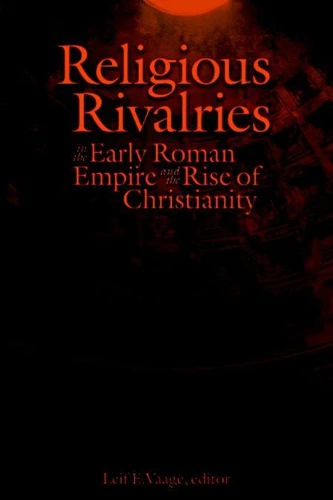
Religious Rivalries in the Early Roman Empire and the Rise of Christianity
Par :Formats :
Disponible dans votre compte client Decitre ou Furet du Nord dès validation de votre commande. Le format ePub est :
- Compatible avec une lecture sur My Vivlio (smartphone, tablette, ordinateur)
- Compatible avec une lecture sur liseuses Vivlio
- Pour les liseuses autres que Vivlio, vous devez utiliser le logiciel Adobe Digital Edition. Non compatible avec la lecture sur les liseuses Kindle, Remarkable et Sony
 , qui est-ce ?
Notre partenaire de plateforme de lecture numérique où vous retrouverez l'ensemble de vos ebooks gratuitement
Pour en savoir plus sur nos ebooks, consultez notre aide en ligne ici
C'est si simple ! Lisez votre ebook avec l'app Vivlio sur votre tablette, mobile ou ordinateur :

- Nombre de pages344
- FormatePub
- ISBN978-1-55458-809-1
- EAN9781554588091
- Date de parution30/10/2010
- Protection num.Digital Watermarking
- Taille717 Ko
- Infos supplémentairesepub
- ÉditeurWilfrid Laurier University Press
Résumé
Religious Rivalries in the Early Roman Empire and the Rise of Christianity discusses the diverse cultural destinies of early Christianity, early Judaism, and other ancient religious groups as a question of social rivalry. The book is divided into three main sections. The first section debates the degree to which the category of rivalry adequately names the issue(s) that must be addressed when comparing and contrasting the social "success" of different religious groups in antiquity.
The second is a critical assessment of the common modern category of "mission" to describe the inner dynamic of such a process; it discusses the early Christian apostle Paul, the early Jewish historian Josephus, and ancient Mithraism. The third section of the book is devoted to "the rise of Christianity, " primarily in response to the similarly titled work of the American sociologist of religion Rodney Stark.
While it is not clear that any of these groups imagined its own success necessarily entailing the elimination of others, it does seem that early Christianity had certain habits, both of speech and practice, which made it particularly apt to succeed (in) the Roman Empire.
The second is a critical assessment of the common modern category of "mission" to describe the inner dynamic of such a process; it discusses the early Christian apostle Paul, the early Jewish historian Josephus, and ancient Mithraism. The third section of the book is devoted to "the rise of Christianity, " primarily in response to the similarly titled work of the American sociologist of religion Rodney Stark.
While it is not clear that any of these groups imagined its own success necessarily entailing the elimination of others, it does seem that early Christianity had certain habits, both of speech and practice, which made it particularly apt to succeed (in) the Roman Empire.