SOLDES
Jusqu'à -70% sur une sélection d'articles*

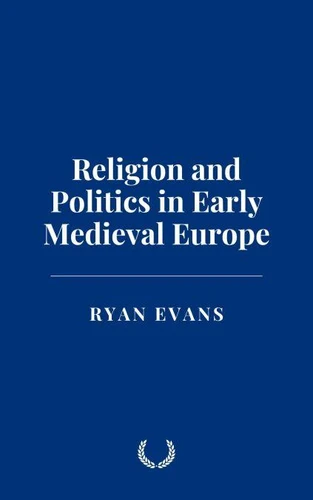
Religion and Politics in Early Medieval Europe
Par :Formats :
Disponible dans votre compte client Decitre ou Furet du Nord dès validation de votre commande. Le format ePub est :
- Compatible avec une lecture sur My Vivlio (smartphone, tablette, ordinateur)
- Compatible avec une lecture sur liseuses Vivlio
- Pour les liseuses autres que Vivlio, vous devez utiliser le logiciel Adobe Digital Edition. Non compatible avec la lecture sur les liseuses Kindle, Remarkable et Sony
 , qui est-ce ?
Notre partenaire de plateforme de lecture numérique où vous retrouverez l'ensemble de vos ebooks gratuitement
Pour en savoir plus sur nos ebooks, consultez notre aide en ligne ici
C'est si simple ! Lisez votre ebook avec l'app Vivlio sur votre tablette, mobile ou ordinateur :

- FormatePub
- ISBN8230469346
- EAN9798230469346
- Date de parution29/01/2025
- Protection num.pas de protection
- Infos supplémentairesepub
- ÉditeurIndependently Published
Résumé
This book provides a comprehensive examination of the profound influence of the Church on the political, social, and cultural development of medieval and early modern Europe. It explores the ways in which Christianity, through its institutional power, shaped the formation of European national identities, the intellectual landscape, and the relationships between Church and state. The narrative begins with the early medieval period, analyzing the Church's role in the consolidation of monarchies following the fall of the Roman Empire, and follows the evolution of this relationship through key events such as the Carolingian Renaissance, the Investiture Controversy, and the Crusades.
The book delves into the rise of Scholasticism and the Church's intellectual authority, illustrating its central role in shaping theological, philosophical, and legal thought. The work also traces the impact of the Protestant Reformation, highlighting the religious and political tensions that reshaped European society, culminating in the Catholic Counter-Reformation and the formation of new religious identities.
By exploring the intersections of Church and state, the development of national identities, and the growing conflicts over ecclesiastical power, the book offers a nuanced view of how the Church both fostered unity and provoked division. Finally, it examines the Church's relationship with the intellectual movements of the Renaissance and early modern period, and its complex interaction with the rise of scientific thought.
The book ultimately reveals the Church's role as both a unifying and divisive force in European history, underscoring its lasting impact on the religious, political, and intellectual trajectory of Europe, from the Middle Ages to the dawn of the modern era.
The book delves into the rise of Scholasticism and the Church's intellectual authority, illustrating its central role in shaping theological, philosophical, and legal thought. The work also traces the impact of the Protestant Reformation, highlighting the religious and political tensions that reshaped European society, culminating in the Catholic Counter-Reformation and the formation of new religious identities.
By exploring the intersections of Church and state, the development of national identities, and the growing conflicts over ecclesiastical power, the book offers a nuanced view of how the Church both fostered unity and provoked division. Finally, it examines the Church's relationship with the intellectual movements of the Renaissance and early modern period, and its complex interaction with the rise of scientific thought.
The book ultimately reveals the Church's role as both a unifying and divisive force in European history, underscoring its lasting impact on the religious, political, and intellectual trajectory of Europe, from the Middle Ages to the dawn of the modern era.
A propos de Ryan Evans


2,99 €


2,99 €


2,99 €


3,99 €

2,99 €
2,99 €