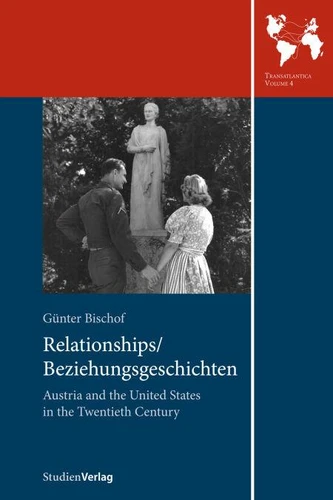
Relationships/Beziehungsgeschichten. Austria and the United States in the Twentieth Century
Par :Formats :
Disponible dans votre compte client Decitre ou Furet du Nord dès validation de votre commande. Le format ePub est :
- Compatible avec une lecture sur My Vivlio (smartphone, tablette, ordinateur)
- Compatible avec une lecture sur liseuses Vivlio
- Pour les liseuses autres que Vivlio, vous devez utiliser le logiciel Adobe Digital Edition. Non compatible avec la lecture sur les liseuses Kindle, Remarkable et Sony
 , qui est-ce ?
Notre partenaire de plateforme de lecture numérique où vous retrouverez l'ensemble de vos ebooks gratuitement
Pour en savoir plus sur nos ebooks, consultez notre aide en ligne ici
C'est si simple ! Lisez votre ebook avec l'app Vivlio sur votre tablette, mobile ou ordinateur :

- Nombre de pages274
- FormatePub
- ISBN978-3-7065-5727-6
- EAN9783706557276
- Date de parution28/04/2014
- Protection num.Digital Watermarking
- Taille2 Mo
- Infos supplémentairesepub
- ÉditeurZum rauhen Stein
Résumé
After the breakup of the Habsburg Monarchy, the Austrian-American relationship was characterized by a dwarf confronting a giant. America continued to be a heaven for a better life for many Austrian emigrants. For the growing American preponderant position in the world after World War I, the small Austrian Republic was insignificant. And yet there were times when Austria mattered geopolitically. During the post-World War II occupation of Austria, the U.
S. helped reconstruct Austria economically and was the biggest champion of its independence. During the Cold War, the U. S. frequently used Austria as a mediator site of summit meetings. American mass production models, consumerism, and popular culture were adopted by Austrian youth. Americanization and American preponderance also produced anti-Americanism. With the end of the Cold War and Austria's accession to the European Union it once again lost significance for Washington's geopolitics.
S. helped reconstruct Austria economically and was the biggest champion of its independence. During the Cold War, the U. S. frequently used Austria as a mediator site of summit meetings. American mass production models, consumerism, and popular culture were adopted by Austrian youth. Americanization and American preponderance also produced anti-Americanism. With the end of the Cold War and Austria's accession to the European Union it once again lost significance for Washington's geopolitics.