SOLDES
Jusqu'à -70% sur une sélection d'articles*

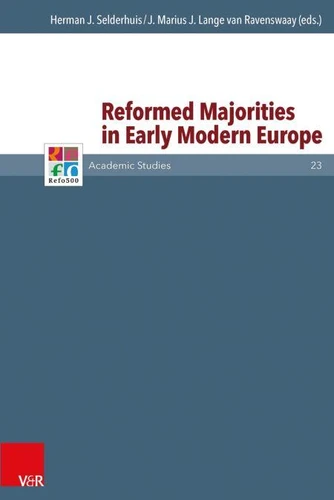
Reformed Majorities in Early Modern Europe
Par : , , , ,Formats :
Disponible dans votre compte client Decitre ou Furet du Nord dès validation de votre commande. Le format PDF est :
- Compatible avec une lecture sur My Vivlio (smartphone, tablette, ordinateur)
- Compatible avec une lecture sur liseuses Vivlio
- Pour les liseuses autres que Vivlio, vous devez utiliser le logiciel Adobe Digital Edition. Non compatible avec la lecture sur les liseuses Kindle, Remarkable et Sony
 , qui est-ce ?
Notre partenaire de plateforme de lecture numérique où vous retrouverez l'ensemble de vos ebooks gratuitement
Pour en savoir plus sur nos ebooks, consultez notre aide en ligne ici
C'est si simple ! Lisez votre ebook avec l'app Vivlio sur votre tablette, mobile ou ordinateur :

- Nombre de pages373
- FormatPDF
- ISBN978-3-647-55083-1
- EAN9783647550831
- Date de parution11/03/2015
- Protection num.pas de protection
- Taille4 Mo
- Infos supplémentairespdf
- ÉditeurVandenhoeck & Ruprecht
Résumé
This volume contains the papers of the international RefoRC conference on 'Reformed Majorities and Minorities in Early Modern Europe' as it was organized by the Johannes a Lasco Bibliothek, Emden in cooperation with the Faculty of 'Artes Liberales' of the University of Warsaw. The conference took place April 10-12, 2013 in Emden and was part of the research project 'Doctrina et Tolerantia' directed by the Johannes a Lasco Bibliothek.
The contributions in this volume deal with the question how the relation between doctrine and toleration was dealt with in territories with a Reformed majority. Did the refugee-experience of the Reformed make them tolerant or militant? How did official policy relate to everyday practice? Were there different opinions on this issue within the Reformed tradition? The answers to these questions give more insights into the diversity of international Calvinism and the way theory was put into practice.
The contributions in this volume deal with the question how the relation between doctrine and toleration was dealt with in territories with a Reformed majority. Did the refugee-experience of the Reformed make them tolerant or militant? How did official policy relate to everyday practice? Were there different opinions on this issue within the Reformed tradition? The answers to these questions give more insights into the diversity of international Calvinism and the way theory was put into practice.
A propos de Herman J. Selderhuis
140,00 €



130,00 €
275,00 €

110,00 €