OFFRE LISEUSES
Une liseuse achetée = une housse offerte* jusqu'au 21 juin

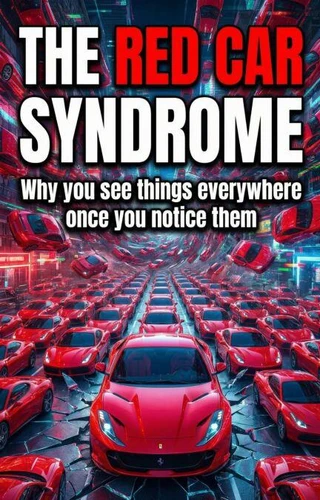
Red Car Syndrome. Why you see things everywhere once you notice them
Par :Formats :
Disponible dans votre compte client Decitre ou Furet du Nord dès validation de votre commande. Le format ePub est :
- Compatible avec une lecture sur My Vivlio (smartphone, tablette, ordinateur)
- Compatible avec une lecture sur liseuses Vivlio
- Pour les liseuses autres que Vivlio, vous devez utiliser le logiciel Adobe Digital Edition. Non compatible avec la lecture sur les liseuses Kindle, Remarkable et Sony
 , qui est-ce ?
Notre partenaire de plateforme de lecture numérique où vous retrouverez l'ensemble de vos ebooks gratuitement
Pour en savoir plus sur nos ebooks, consultez notre aide en ligne ici
C'est si simple ! Lisez votre ebook avec l'app Vivlio sur votre tablette, mobile ou ordinateur :

- Nombre de pages132
- FormatePub
- ISBN978-3-565-22725-9
- EAN9783565227259
- Date de parution07/02/2026
- Protection num.pas de protection
- Taille568 Ko
- Infos supplémentairesepub
- ÉditeurEmphaloz Publishing House
Résumé
"The Red Car Syndrome - Why you see things everywhere once you notice them" explains the "Frequency Illusion" (also known as the Baader-Meinhof Phenomenon). We have all experienced it: You learn a new word, or buy a specific model of car, and suddenly you see it absolutely everywhere. You think it's a coincidence or a cosmic sign.
Psychologist Emily Foster reveals it is actually a glitch in your brain's attention filter.
The book combines two biases: "Selective Attention" (your brain starts looking for the thing) and "Confirmation Bias" (you ignore all the times you don't see it). "The Red Car Syndrome" explores how this effect shapes our reality, from believing in horoscopes to paranoia about crime rates. It teaches readers that the world hasn't changed; only their attention has. It is a guide to understanding that we do not see the world as it is, but as we are primed to see it.
The book combines two biases: "Selective Attention" (your brain starts looking for the thing) and "Confirmation Bias" (you ignore all the times you don't see it). "The Red Car Syndrome" explores how this effect shapes our reality, from believing in horoscopes to paranoia about crime rates. It teaches readers that the world hasn't changed; only their attention has. It is a guide to understanding that we do not see the world as it is, but as we are primed to see it.