SOLDES
Jusqu'à -70% sur une sélection d'articles*

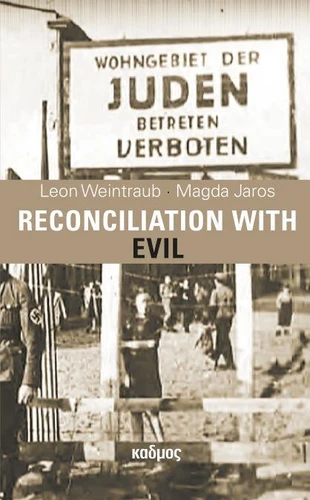
Reconciliation with Evil
Par : ,Formats :
Disponible dans votre compte client Decitre ou Furet du Nord dès validation de votre commande. Le format PDF est :
- Compatible avec une lecture sur My Vivlio (smartphone, tablette, ordinateur)
- Compatible avec une lecture sur liseuses Vivlio
- Pour les liseuses autres que Vivlio, vous devez utiliser le logiciel Adobe Digital Edition. Non compatible avec la lecture sur les liseuses Kindle, Remarkable et Sony
 , qui est-ce ?
Notre partenaire de plateforme de lecture numérique où vous retrouverez l'ensemble de vos ebooks gratuitement
Pour en savoir plus sur nos ebooks, consultez notre aide en ligne ici
C'est si simple ! Lisez votre ebook avec l'app Vivlio sur votre tablette, mobile ou ordinateur :

- Nombre de pages234
- FormatPDF
- ISBN978-3-96750-074-5
- EAN9783967500745
- Date de parution15/10/2024
- Protection num.Digital Watermarking
- Taille43 Mo
- Infos supplémentairespdf
- ÉditeurKulturverlag Kadmos Berlin
Résumé
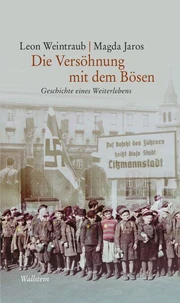
From 1940, Leon Weintraub (born 1926) was forced by the Nazis to live with his family in the Litzmannstadt ghetto and perform forced labour. The skills he learnt there probably saved him from death: when the ghetto was dissolved in 1944, the prisoners were deported to the Auschwitz-Birkenau concentration camp and killed. Weintraub, however, managed to pass himself off as a labour prisoner and thus escape being murdered.
In the turmoil of the final months of the war, he survived several of the Nazis' brutal deportation operations until he finally managed to escape on one of the transports. Most of his family did not survive the Holocaust. In conversations with journalist Magda Jaros, Leon Weintraub talks about his childhood in Lódz and his life after the war: his medical studies in Göttingen, his career in Poland and his emigration to Sweden due to the anti-Semitic March riots in 1968.
It is the story of reconciliation after unspeakable suffering-but also a warning. »Despite the horrors that Leon Weintraub experienced in his life, he constantly believes that dialogue and mutual respect are the way to improve the world. And these are not just words, but are followed by actions. He constantly repeats to all close and familiar people that everyone should approach everyone with respect, because religion, nationality or skin color do not count, but the human-human relationship is the most important.
The determination with which he wants to convey his message to Poles, Germans and Jews who have been united and divided by history, arouses my great admiration.« Joanna Podolska, director of the Dialogue Center Marek Edelman in Lódz
In the turmoil of the final months of the war, he survived several of the Nazis' brutal deportation operations until he finally managed to escape on one of the transports. Most of his family did not survive the Holocaust. In conversations with journalist Magda Jaros, Leon Weintraub talks about his childhood in Lódz and his life after the war: his medical studies in Göttingen, his career in Poland and his emigration to Sweden due to the anti-Semitic March riots in 1968.
It is the story of reconciliation after unspeakable suffering-but also a warning. »Despite the horrors that Leon Weintraub experienced in his life, he constantly believes that dialogue and mutual respect are the way to improve the world. And these are not just words, but are followed by actions. He constantly repeats to all close and familiar people that everyone should approach everyone with respect, because religion, nationality or skin color do not count, but the human-human relationship is the most important.
The determination with which he wants to convey his message to Poles, Germans and Jews who have been united and divided by history, arouses my great admiration.« Joanna Podolska, director of the Dialogue Center Marek Edelman in Lódz