
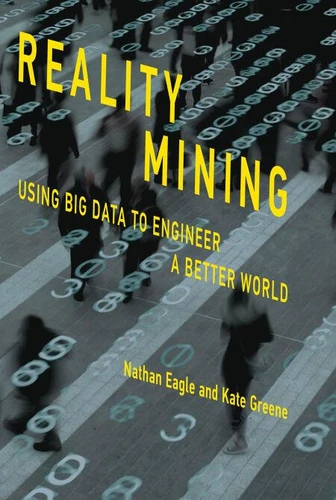
Reality Mining. Using Big Data to Engineer a Better World
Par : ,Formats :
Disponible dans votre compte client Decitre ou Furet du Nord dès validation de votre commande. Le format ePub protégé est :
- Compatible avec une lecture sur My Vivlio (smartphone, tablette, ordinateur)
- Compatible avec une lecture sur liseuses Vivlio
- Pour les liseuses autres que Vivlio, vous devez utiliser le logiciel Adobe Digital Edition. Non compatible avec la lecture sur les liseuses Kindle, Remarkable et Sony
- Non compatible avec un achat hors France métropolitaine
 , qui est-ce ?
Notre partenaire de plateforme de lecture numérique où vous retrouverez l'ensemble de vos ebooks gratuitement
Pour en savoir plus sur nos ebooks, consultez notre aide en ligne ici
C'est si simple ! Lisez votre ebook avec l'app Vivlio sur votre tablette, mobile ou ordinateur :

- Nombre de pages208
- FormatePub
- ISBN978-0-262-32457-1
- EAN9780262324571
- Date de parution08/08/2014
- Protection num.Adobe DRM
- Taille351 Ko
- Infos supplémentairesepub
- ÉditeurThe MIT Press
Résumé
A look at how Big Data can be put to positive use, from helping users break bad habits to tracking the global spread of disease. Big Data is made up of lots of little data: numbers entered into cell phones, addresses entered into GPS devices, visits to websites, online purchases, ATM transactions, and any other activity that leaves a digital trail. Although the abuse of Big Data-surveillance, spying, hacking-has made headlines, it shouldn't overshadow the abundant positive applications of Big Data.
In Reality Mining, Nathan Eagle and Kate Greene cut through the hype and the headlines to explore the positive potential of Big Data, showing the ways in which the analysis of Big Data ("Reality Mining") can be used to improve human systems as varied as political polling and disease tracking, while considering user privacy. Eagle, a recognized expert in the field, and Greene, an experienced technology journalist, describe Reality Mining at five different levels: the individual, the neighborhood and organization, the city, the nation, and the world.
For each level, they first offer a nontechnical explanation of data collection methods and then describe applications and systems that have been or could be built. These include a mobile app that helps smokers quit smoking; a workplace "knowledge system"; the use of GPS, Wi-Fi, and mobile phone data to manage and predict traffic flows; and the analysis of social media to track the spread of disease.
Eagle and Greene argue that Big Data, used respectfully and responsibly, can help people live better, healthier, and happier lives.
In Reality Mining, Nathan Eagle and Kate Greene cut through the hype and the headlines to explore the positive potential of Big Data, showing the ways in which the analysis of Big Data ("Reality Mining") can be used to improve human systems as varied as political polling and disease tracking, while considering user privacy. Eagle, a recognized expert in the field, and Greene, an experienced technology journalist, describe Reality Mining at five different levels: the individual, the neighborhood and organization, the city, the nation, and the world.
For each level, they first offer a nontechnical explanation of data collection methods and then describe applications and systems that have been or could be built. These include a mobile app that helps smokers quit smoking; a workplace "knowledge system"; the use of GPS, Wi-Fi, and mobile phone data to manage and predict traffic flows; and the analysis of social media to track the spread of disease.
Eagle and Greene argue that Big Data, used respectfully and responsibly, can help people live better, healthier, and happier lives.