SOLDES
Jusqu'à -70% sur une sélection d'articles*

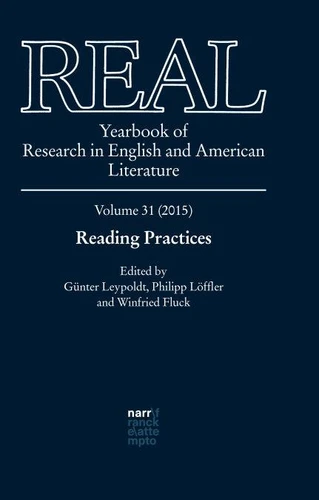
REAL - Yearbook of Research in English and American Literature. Vol. 31 (2015): Reading Practices
Par : , , ,Formats :
Disponible dans votre compte client Decitre ou Furet du Nord dès validation de votre commande. Le format PDF est :
- Compatible avec une lecture sur My Vivlio (smartphone, tablette, ordinateur)
- Compatible avec une lecture sur liseuses Vivlio
- Pour les liseuses autres que Vivlio, vous devez utiliser le logiciel Adobe Digital Edition. Non compatible avec la lecture sur les liseuses Kindle, Remarkable et Sony
 , qui est-ce ?
Notre partenaire de plateforme de lecture numérique où vous retrouverez l'ensemble de vos ebooks gratuitement
Pour en savoir plus sur nos ebooks, consultez notre aide en ligne ici
C'est si simple ! Lisez votre ebook avec l'app Vivlio sur votre tablette, mobile ou ordinateur :

- Nombre de pages237
- FormatPDF
- ISBN978-3-8233-7186-1
- EAN9783823371861
- Date de parution09/12/2015
- Protection num.Digital Watermarking
- Taille2 Mo
- Infos supplémentairespdf
- ÉditeurGunter Narr Verlag
Résumé
REAL invites contributions on the relationship between literature and cultural change. The study of culture has to face the difficulty of not being able to observe its object directly. Its only access is via cultural phenomena as observable products of human activity: artefacts, texts, rites, symbols, forms of conduct. If scholars wish to study cultural change, they need to do so by investigating the changing relationships among these phenomena, the changing connections between social structures, mentalities and the material dimension of texts, artefacts and other objects.
While some scholars have rejected the concept of culture because of this indirectness, others - from Malinowski to Luhmann - have attempted to make it theoretically more precise and historically more saturated. Societies change as well as cultures, but they are not the same and they evolve at different speeds.
While some scholars have rejected the concept of culture because of this indirectness, others - from Malinowski to Luhmann - have attempted to make it theoretically more precise and historically more saturated. Societies change as well as cultures, but they are not the same and they evolve at different speeds.