


David Beauchard (David B.) was born in Nîmes on February 9th, 1959. He decided to study advertising at the Duperré School for Applied Arts in Paris, where he developed a black and white technique inspired by his favorite authors of the time (Tardi, Pratt, and Munoz).
His first entry into the world of comics came as a scriptwriter for artist Olivier Legan ("Pas de samba pour capitaine Tonnerre, " Glénat, 1985) and as an illustrator for "Timbre maudit" in the magazine Okapi (later republished by Bayard, 1986).
At the same time he collaborated on small projects in the short-lived magazine Chic, as well as on "Zèbre, " a five-episode series in the magazine A Suivre. In 1989, he regularly appeared in the short-lived magazine Tintin Reporter, where he created many illustrations and complete educational stories ("Les premiers escaliers mécaniques, " "Le P'tit Lu: un biscuit moderne, " "Géronimo, " "Duel pour le Pôle Nord, " "L'invention de l'aérosol"). A founding member of L'Association in 1990, he was able to devote his work to pure graphic research in his magazine "Lapin" and in the various collections launched by this cooperative of Parisian authors.
The movement spread rapidly and was favorably received among independent publishers. His bibliography rapidly expanded: "Les Leçons du nourrisson savant" (Le Seuil, 1990, followed by "Le Nourrisson savant et ses parents"), "La Bombe familiale" (L'Association, 1991), "Le Cheval blême" (L'Association 1992, a work in which he started to transpose his personal nightmares into pictures), "Le Cercueil de course" (L'Association, 1993), "Le Nain jaune" (five quarterly booklets with Cornélius in 1993-1994), "Le Livre somnanbule" (Éditions Automne 67, 1994), "Le Messie discret" (a story published in a collective book "Le Retour de Dieu" by Éditions Autrement, in 1994), "Les 4 savants" (a series of occasional booklets with Cornélius since 1996), and "Les Incidents de la nuit" (L'Association, 1999). The metaphysical, the world of dreams, and a marked taste for the fantastic are translated in his work into expressive black and white strokes.
This quest to evoke highly personal dreamlike or biographical elements found its ultimate expression in "L'Ascension du Haut-Mal, " a series of five albums published by L'Association (from 1996 onwards) in which he depicted the life of his brother, who suffers from epilepsy. Although not exhaustive, the list of magazines with which David B. has collaborated includes: Circus, Chic, Okapi, A Suivre, L'echo Des Savanes, Viper, Rare et Cher, Labo, Lapin, Strappazin (Switzerland), Kaiser (Germany), Nosotros Las Muertas (Spain), El Building, Baraka, Fusee, Revolution, La Vie Ouvriere, Fripounet, Perlin and Info-Junior. In 1997, the "Roman B.
D." collection from Dargaud put out "Tengû carré, " while David B. wrote the script for artist Christophe Blain for two other books with the same publisher: "La Révolte de Hop-Frog, " followed by "Les Ogres." After this, another side of his talent was revealed in the Aire Libre collection from Dupuis. In April 2000, he developed the universe of the writer Marcel Schwob in the fantasy story "Le capitaine écarlate, " with illustrations by Emmanuel Guibert.
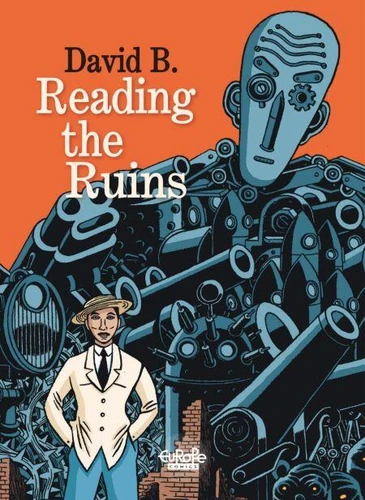
He then tackled a personal allegory on war and its destructive impact in the eclectic and beautiful "La Lecture des ruines" (2001; "Reading the Ruins, " Europe Comics 2018). For this last work of great graphical power, Tomasine's clear bright colours provide support for David B.'s incomparable mastery of the black and white style. David Beauchard (David B.) was born in Nîmes on February 9th, 1959.
He decided to study advertising at the Duperré School for Applied Arts in Paris, where he developed a black and white technique inspired by his favorite authors of the time (Tardi, Pratt, and Munoz). His first entry into the world of comics came as a scriptwriter for artist Olivier Legan ("Pas de samba pour capitaine Tonnerre, " Glénat, 1985) and as an illustrator for "Timbre maudit" in the magazine Okapi (later republished by Bayard, 1986).
At the same time he collaborated on small projects in the short-lived magazine Chic, as well as on "Zèbre, " a five-episode series in the magazine A Suivre. In 1989, he regularly appeared in the short-lived magazine Tintin Reporter, where he created many illustrations and complete educational stories ("Les premiers escaliers mécaniques, " "Le P'tit Lu: un biscuit moderne, " "Géronimo, " "Duel pour le Pôle Nord, " "L'invention de l'aérosol"). A founding member of L'Association in 1990, he was able to devote his work to pure graphic research in his magazine "Lapin" and in the various collections launched by this cooperative of Parisian authors.
The movement spread rapidly and was favorably received among independent publishers. His bibliography rapidly expanded: "Les Leçons du nourrisson savant" (Le Seuil, 1990, followed by "Le Nourrisson savant et ses parents"), "La Bombe familiale" (L'Association, 1991), "Le Cheval blême" (L'Association 1992, a work in which he started to transpose his personal nightmares into pictures), "Le Cercueil de course" (L'Association, 1993), "Le Nain jaune" (five quarterly booklets with Cornélius in 1993-1994), "Le Livre somnanbule" (Éditions Automne 67, 1994), "Le Messie discret" (a story published in a collective book "Le Retour de Dieu" by Éditions Autrement, in 1994), "Les 4 savants" (a series of occasional booklets with Cornélius since 1996), and "Les Incidents de la nuit" (L'Association, 1999). The metaphysical, the world of dreams, and a marked taste for the fantastic are translated in his work into expressive black and white strokes.
This quest to evoke highly personal dreamlike or biographical elements found its ultimate expression in "L'Ascension du Haut-Mal, " a series of five albums published by L'Association (from 1996 onwards) in which he depicted the life of his brother, who suffers from epilepsy. Although not exhaustive, the list of magazines with which David B. has collaborated includes: Circus, Chic, Okapi, A Suivre, L'echo Des Savanes, Viper, Rare et Cher, Labo, Lapin, Strappazin (Switzerland), Kaiser (Germany), Nosotros Las Muertas (Spain), El Building, Baraka, Fusee, Revolution, La Vie Ouvriere, Fripounet, Perlin and Info-Junior. In 1997, the "Roman B.
D." collection from Dargaud put out "Tengû carré, " while David B. wrote the script for artist Christophe Blain for two other books with the same publisher: "La Révolte de Hop-Frog, " followed by "Les Ogres." After this, another side of his talent was revealed in the Aire Libre collection from Dupuis. In April 2000, he developed the universe of the writer Marcel Schwob in the fantasy story "Le capitaine écarlate, " with illustrations by Emmanuel Guibert.
He then tackled a personal allegory on war and its destructive impact in the eclectic and beautiful "La Lecture des ruines" (2001; "Reading the Ruins, " Europe Comics 2018). For this last work of great graphical power, Tomasine's clear bright colours provide support for David B.'s incomparable mastery of the black and white style.
At the same time he collaborated on small projects in the short-lived magazine Chic, as well as on "Zèbre, " a five-episode series in the magazine A Suivre. In 1989, he regularly appeared in the short-lived magazine Tintin Reporter, where he created many illustrations and complete educational stories ("Les premiers escaliers mécaniques, " "Le P'tit Lu: un biscuit moderne, " "Géronimo, " "Duel pour le Pôle Nord, " "L'invention de l'aérosol"). A founding member of L'Association in 1990, he was able to devote his work to pure graphic research in his magazine "Lapin" and in the various collections launched by this cooperative of Parisian authors.
The movement spread rapidly and was favorably received among independent publishers. His bibliography rapidly expanded: "Les Leçons du nourrisson savant" (Le Seuil, 1990, followed by "Le Nourrisson savant et ses parents"), "La Bombe familiale" (L'Association, 1991), "Le Cheval blême" (L'Association 1992, a work in which he started to transpose his personal nightmares into pictures), "Le Cercueil de course" (L'Association, 1993), "Le Nain jaune" (five quarterly booklets with Cornélius in 1993-1994), "Le Livre somnanbule" (Éditions Automne 67, 1994), "Le Messie discret" (a story published in a collective book "Le Retour de Dieu" by Éditions Autrement, in 1994), "Les 4 savants" (a series of occasional booklets with Cornélius since 1996), and "Les Incidents de la nuit" (L'Association, 1999). The metaphysical, the world of dreams, and a marked taste for the fantastic are translated in his work into expressive black and white strokes.
This quest to evoke highly personal dreamlike or biographical elements found its ultimate expression in "L'Ascension du Haut-Mal, " a series of five albums published by L'Association (from 1996 onwards) in which he depicted the life of his brother, who suffers from epilepsy. Although not exhaustive, the list of magazines with which David B. has collaborated includes: Circus, Chic, Okapi, A Suivre, L'echo Des Savanes, Viper, Rare et Cher, Labo, Lapin, Strappazin (Switzerland), Kaiser (Germany), Nosotros Las Muertas (Spain), El Building, Baraka, Fusee, Revolution, La Vie Ouvriere, Fripounet, Perlin and Info-Junior. In 1997, the "Roman B.
D." collection from Dargaud put out "Tengû carré, " while David B. wrote the script for artist Christophe Blain for two other books with the same publisher: "La Révolte de Hop-Frog, " followed by "Les Ogres." After this, another side of his talent was revealed in the Aire Libre collection from Dupuis. In April 2000, he developed the universe of the writer Marcel Schwob in the fantasy story "Le capitaine écarlate, " with illustrations by Emmanuel Guibert.
He then tackled a personal allegory on war and its destructive impact in the eclectic and beautiful "La Lecture des ruines" (2001; "Reading the Ruins, " Europe Comics 2018). For this last work of great graphical power, Tomasine's clear bright colours provide support for David B.'s incomparable mastery of the black and white style. David Beauchard (David B.) was born in Nîmes on February 9th, 1959.
He decided to study advertising at the Duperré School for Applied Arts in Paris, where he developed a black and white technique inspired by his favorite authors of the time (Tardi, Pratt, and Munoz). His first entry into the world of comics came as a scriptwriter for artist Olivier Legan ("Pas de samba pour capitaine Tonnerre, " Glénat, 1985) and as an illustrator for "Timbre maudit" in the magazine Okapi (later republished by Bayard, 1986).
At the same time he collaborated on small projects in the short-lived magazine Chic, as well as on "Zèbre, " a five-episode series in the magazine A Suivre. In 1989, he regularly appeared in the short-lived magazine Tintin Reporter, where he created many illustrations and complete educational stories ("Les premiers escaliers mécaniques, " "Le P'tit Lu: un biscuit moderne, " "Géronimo, " "Duel pour le Pôle Nord, " "L'invention de l'aérosol"). A founding member of L'Association in 1990, he was able to devote his work to pure graphic research in his magazine "Lapin" and in the various collections launched by this cooperative of Parisian authors.
The movement spread rapidly and was favorably received among independent publishers. His bibliography rapidly expanded: "Les Leçons du nourrisson savant" (Le Seuil, 1990, followed by "Le Nourrisson savant et ses parents"), "La Bombe familiale" (L'Association, 1991), "Le Cheval blême" (L'Association 1992, a work in which he started to transpose his personal nightmares into pictures), "Le Cercueil de course" (L'Association, 1993), "Le Nain jaune" (five quarterly booklets with Cornélius in 1993-1994), "Le Livre somnanbule" (Éditions Automne 67, 1994), "Le Messie discret" (a story published in a collective book "Le Retour de Dieu" by Éditions Autrement, in 1994), "Les 4 savants" (a series of occasional booklets with Cornélius since 1996), and "Les Incidents de la nuit" (L'Association, 1999). The metaphysical, the world of dreams, and a marked taste for the fantastic are translated in his work into expressive black and white strokes.
This quest to evoke highly personal dreamlike or biographical elements found its ultimate expression in "L'Ascension du Haut-Mal, " a series of five albums published by L'Association (from 1996 onwards) in which he depicted the life of his brother, who suffers from epilepsy. Although not exhaustive, the list of magazines with which David B. has collaborated includes: Circus, Chic, Okapi, A Suivre, L'echo Des Savanes, Viper, Rare et Cher, Labo, Lapin, Strappazin (Switzerland), Kaiser (Germany), Nosotros Las Muertas (Spain), El Building, Baraka, Fusee, Revolution, La Vie Ouvriere, Fripounet, Perlin and Info-Junior. In 1997, the "Roman B.
D." collection from Dargaud put out "Tengû carré, " while David B. wrote the script for artist Christophe Blain for two other books with the same publisher: "La Révolte de Hop-Frog, " followed by "Les Ogres." After this, another side of his talent was revealed in the Aire Libre collection from Dupuis. In April 2000, he developed the universe of the writer Marcel Schwob in the fantasy story "Le capitaine écarlate, " with illustrations by Emmanuel Guibert.
He then tackled a personal allegory on war and its destructive impact in the eclectic and beautiful "La Lecture des ruines" (2001; "Reading the Ruins, " Europe Comics 2018). For this last work of great graphical power, Tomasine's clear bright colours provide support for David B.'s incomparable mastery of the black and white style.