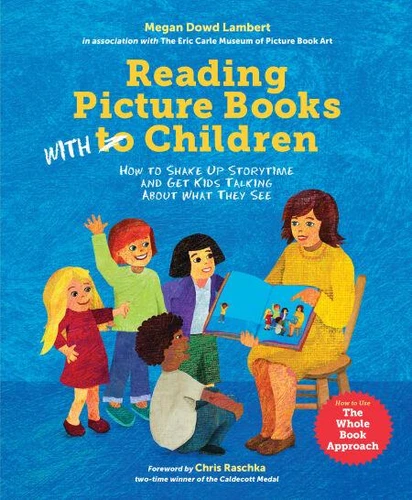
Reading Picture Books with Children. How to Shake Up Storytime and Get Kids Talking about What They See
Par : , ,Formats :
Disponible dans votre compte client Decitre ou Furet du Nord dès validation de votre commande. Le format Epub fixed layout protégé est :
- Compatible avec une lecture sur My Vivlio (smartphone, tablette, ordinateur)
- Compatible avec une lecture sur liseuses Vivlio
- Pour les liseuses autres que Vivlio, vous devez utiliser le logiciel Adobe Digital Edition. Non compatible avec la lecture sur les liseuses Kindle, Remarkable et Sony
- Non compatible avec un achat hors France métropolitaine
 , qui est-ce ?
Notre partenaire de plateforme de lecture numérique où vous retrouverez l'ensemble de vos ebooks gratuitement
Pour en savoir plus sur nos ebooks, consultez notre aide en ligne ici
C'est si simple ! Lisez votre ebook avec l'app Vivlio sur votre tablette, mobile ou ordinateur :

- Nombre de pages176
- FormatEpub fixed layout
- ISBN978-1-60734-563-3
- EAN9781607345633
- Date de parution03/11/2015
- Protection num.Adobe DRM
- Taille16 Mo
- Infos supplémentairesepub
- ÉditeurCharlesbridge
Résumé
A new, interactive approach to storytime, The Whole Book Approach was developed in conjunction with the Eric Carle Museum of Picture Book Art and expert author Megan Dowd Lambert's graduate work in children's literature at Simmons College, offering a practical guide for reshaping storytime and getting kids to think with their eyes. Traditional storytime often offers a passive experience for kids, but the Whole Book approach asks the youngest of readers to ponder all aspects of a picture book and to use their critical thinking skills.
Using classic examples, Megan asks kids to think about why the trim size of Ludwig Bemelman's Madeline is so generous, or why the typeset in David Wiesner's Caldecott winner, The Three Pigs, appears to twist around the page, or why books like Chris Van Allsburg's The Polar Express and Eric Carle's The Very Hungry Caterpillar are printed landscape instead of portrait. The dynamic discussions that result from this shared reading style range from the profound to the hilarious and will inspire adults to make children's responses to text, art, and design an essential part of storytime.
Using classic examples, Megan asks kids to think about why the trim size of Ludwig Bemelman's Madeline is so generous, or why the typeset in David Wiesner's Caldecott winner, The Three Pigs, appears to twist around the page, or why books like Chris Van Allsburg's The Polar Express and Eric Carle's The Very Hungry Caterpillar are printed landscape instead of portrait. The dynamic discussions that result from this shared reading style range from the profound to the hilarious and will inspire adults to make children's responses to text, art, and design an essential part of storytime.