
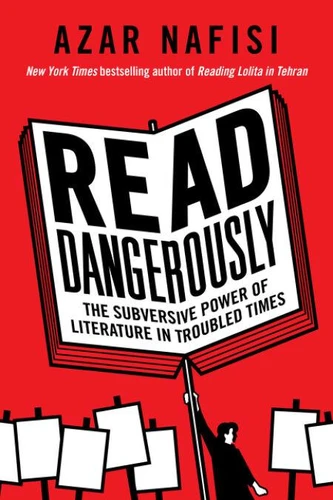
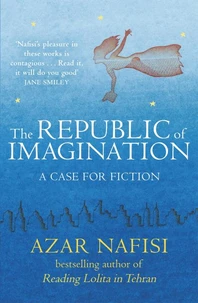
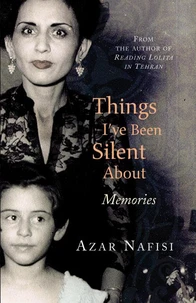
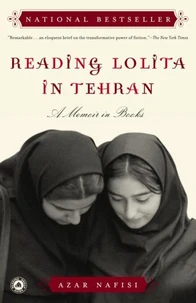
AZAR NAFISI is the author of the multi-award-winning New York Times bestseller Reading Lolita in Tehran, as well as Things I've Been Silent About, The Republic of Imagination, and That Other World. Formerly a Fellow at Johns Hopkins University's Foreign Policy Institute, she has taught at Oxford and several universities in Tehran. She lives in Washington, D. C.
Read Dangerously. The Subversive Power of Literature in Troubled Times
Par :Formats :
Disponible dans votre compte client Decitre ou Furet du Nord dès validation de votre commande. Le format ePub protégé est :
- Compatible avec une lecture sur My Vivlio (smartphone, tablette, ordinateur)
- Compatible avec une lecture sur liseuses Vivlio
- Pour les liseuses autres que Vivlio, vous devez utiliser le logiciel Adobe Digital Edition. Non compatible avec la lecture sur les liseuses Kindle, Remarkable et Sony
- Non compatible avec un achat hors France métropolitaine
 , qui est-ce ?
Notre partenaire de plateforme de lecture numérique où vous retrouverez l'ensemble de vos ebooks gratuitement
Pour en savoir plus sur nos ebooks, consultez notre aide en ligne ici
C'est si simple ! Lisez votre ebook avec l'app Vivlio sur votre tablette, mobile ou ordinateur :

- Nombre de pages240
- FormatePub
- ISBN978-0-06-294738-3
- EAN9780062947383
- Date de parution08/03/2022
- Protection num.Adobe DRM
- Infos supplémentairesepub
- ÉditeurDey Street Books
Résumé
The New York Times bestselling author of Reading Lolita in Tehran returns with a guide to the power of literature in turbulent times, arming readers with a resistance reading list, ranging from James Baldwin to Zora Neale Hurston to Margaret Atwood."[A] stunning look at the power of reading. ... Provokes and inspires at every turn." -Publishers Weekly (starred review)"Remarkable. ... Audacious." -The Progressive"Stunningly beautiful and perceptive." -Los Angeles Review of BooksWhat is the role of literature in an era when one political party wages continual war on writers and the press? What is the connection between political strife in our daily lives, and the way we meet our enemies on the page in fiction? How can literature, through its free exchange, affect politics?In this galvanizing guide to literature as resistance, Nafisi seeks to answer these questions.
Drawing on her experiences as a woman and voracious reader living in the Islamic Republic of Iran, her life as an immigrant in the United States, and her role as literature professor in both countries, she crafts an argument for why, in a genuine democracy, we must engage with the enemy, and how literature can be a vehicle for doing so. Structured as a series of letters to her father, who taught her as a child about how literature can rescue us in times of trauma, Nafisi explores the most probing questions of our time through the works of Toni Morrison, Salman Rushdie, James Baldwin, Margaret Atwood, and more.
Drawing on her experiences as a woman and voracious reader living in the Islamic Republic of Iran, her life as an immigrant in the United States, and her role as literature professor in both countries, she crafts an argument for why, in a genuine democracy, we must engage with the enemy, and how literature can be a vehicle for doing so. Structured as a series of letters to her father, who taught her as a child about how literature can rescue us in times of trauma, Nafisi explores the most probing questions of our time through the works of Toni Morrison, Salman Rushdie, James Baldwin, Margaret Atwood, and more.
A propos de Azar Nafisi

3.8/5
3.5/5
11,95 €

3.3/5
Babbitt
E-book
8,02 €

4/5
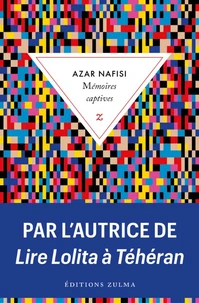
Mémoires captives
Poche
10,95 €

3.8/5
3.5/5
7,77 €
25,23 €

1/5
8,02 €
9,49 €

Hadji Murad
E-book
4,57 €
12,99 €
9,17 €