SOLDES
Jusqu'à -70% sur une sélection d'articles*

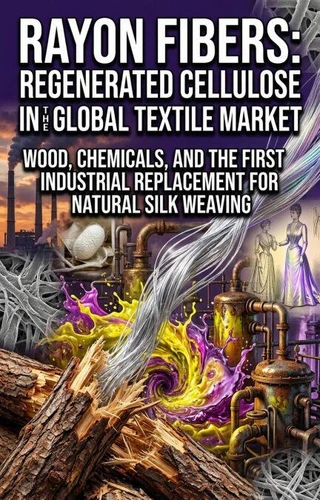
Rayon Fibers: Regenerated Cellulose in the Global Textile Market. Wood, Chemicals, and the First Industrial Replacement for Natural Silk Weaving
Par :Formats :
Disponible dans votre compte client Decitre ou Furet du Nord dès validation de votre commande. Le format ePub est :
- Compatible avec une lecture sur My Vivlio (smartphone, tablette, ordinateur)
- Compatible avec une lecture sur liseuses Vivlio
- Pour les liseuses autres que Vivlio, vous devez utiliser le logiciel Adobe Digital Edition. Non compatible avec la lecture sur les liseuses Kindle, Remarkable et Sony
 , qui est-ce ?
Notre partenaire de plateforme de lecture numérique où vous retrouverez l'ensemble de vos ebooks gratuitement
Pour en savoir plus sur nos ebooks, consultez notre aide en ligne ici
C'est si simple ! Lisez votre ebook avec l'app Vivlio sur votre tablette, mobile ou ordinateur :

- Nombre de pages169
- FormatePub
- ISBN978-3-565-39528-6
- EAN9783565395286
- Date de parution08/04/2026
- Protection num.pas de protection
- Taille973 Ko
- Infos supplémentairesepub
- ÉditeurEmphaloz Publishing House
Résumé
For millennia, shimmering silk was a biological luxury tightly controlled by elite trade routes and the slow lifecycle of the silkworm. The democratization of fashion required a violent chemical intervention. By treating dense wood pulp with highly toxic carbon disulfide, Victorian chemists managed to dissolve timber into a viscous syrup, forcing it through microscopic nozzles to create "artificial silk."
This breakthrough process birthed Rayon, the world's first semi-synthetic fiber.
However, turning rigid trees into flowing garments came at a horrific occupational cost. Early factory workers suffered from severe neurological damage, blindness, and paralysis due to constant exposure to the neurotoxic disulfide fumes. The textile industry deliberately ignored these clinical symptoms to maintain the incredibly lucrative illusion of affordable luxury. Unravel the dark origins of fast fashion.
Examine the corrosive chemistry and the devastating human toll required to break the silkworm's monopoly and mass-produce synthetic elegance.
However, turning rigid trees into flowing garments came at a horrific occupational cost. Early factory workers suffered from severe neurological damage, blindness, and paralysis due to constant exposure to the neurotoxic disulfide fumes. The textile industry deliberately ignored these clinical symptoms to maintain the incredibly lucrative illusion of affordable luxury. Unravel the dark origins of fast fashion.
Examine the corrosive chemistry and the devastating human toll required to break the silkworm's monopoly and mass-produce synthetic elegance.