
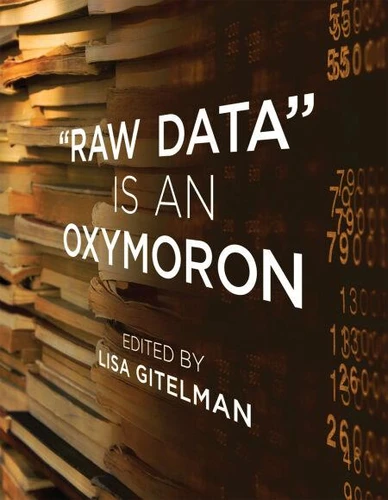
Raw Data Is an Oxymoron
Par :Formats :
Disponible dans votre compte client Decitre ou Furet du Nord dès validation de votre commande. Le format ePub protégé est :
- Compatible avec une lecture sur My Vivlio (smartphone, tablette, ordinateur)
- Compatible avec une lecture sur liseuses Vivlio
- Pour les liseuses autres que Vivlio, vous devez utiliser le logiciel Adobe Digital Edition. Non compatible avec la lecture sur les liseuses Kindle, Remarkable et Sony
- Non compatible avec un achat hors France métropolitaine
 , qui est-ce ?
Notre partenaire de plateforme de lecture numérique où vous retrouverez l'ensemble de vos ebooks gratuitement
Pour en savoir plus sur nos ebooks, consultez notre aide en ligne ici
C'est si simple ! Lisez votre ebook avec l'app Vivlio sur votre tablette, mobile ou ordinateur :

- Nombre de pages192
- FormatePub
- ISBN978-0-262-31233-2
- EAN9780262312332
- Date de parution25/01/2013
- Protection num.Adobe DRM
- Taille7 Mo
- Infos supplémentairesepub
- ÉditeurThe MIT Press
Résumé
Episodes in the history of data, from early modern math problems to today's inescapable "dataveillance, " that demonstrate the dependence of data on culture. We live in the era of Big Data, with storage and transmission capacity measured not just in terabytes but in petabytes (where peta- denotes a quadrillion, or a thousand trillion). Data collection is constant and even insidious, with every click and every "like" stored somewhere for something.
This book reminds us that data is anything but "raw, " that we shouldn't think of data as a natural resource but as a cultural one that needs to be generated, protected, and interpreted. The book's essays describe eight episodes in the history of data from the predigital to the digital. Together they address such issues as the ways that different kinds of data and different domains of inquiry are mutually defining; how data are variously "cooked" in the processes of their collection and use; and conflicts over what can-or can't-be "reduced" to data.
Contributors discuss the intellectual history of data as a concept; describe early financial modeling and some unusual sources for astronomical data; discover the prehistory of the database in newspaper clippings and index cards; and consider contemporary "dataveillance" of our online habits as well as the complexity of scientific data curation. Essay AuthorsGeoffrey C. Bowker, Kevin R. Brine, Ellen Gruber Garvey, Lisa Gitelman, Steven J.
Jackson, Virginia Jackson, Markus Krajewski, Mary Poovey, Rita Raley, David Ribes, Daniel Rosenberg, Matthew Stanley, Travis D. Williams
This book reminds us that data is anything but "raw, " that we shouldn't think of data as a natural resource but as a cultural one that needs to be generated, protected, and interpreted. The book's essays describe eight episodes in the history of data from the predigital to the digital. Together they address such issues as the ways that different kinds of data and different domains of inquiry are mutually defining; how data are variously "cooked" in the processes of their collection and use; and conflicts over what can-or can't-be "reduced" to data.
Contributors discuss the intellectual history of data as a concept; describe early financial modeling and some unusual sources for astronomical data; discover the prehistory of the database in newspaper clippings and index cards; and consider contemporary "dataveillance" of our online habits as well as the complexity of scientific data curation. Essay AuthorsGeoffrey C. Bowker, Kevin R. Brine, Ellen Gruber Garvey, Lisa Gitelman, Steven J.
Jackson, Virginia Jackson, Markus Krajewski, Mary Poovey, Rita Raley, David Ribes, Daniel Rosenberg, Matthew Stanley, Travis D. Williams