SOLDES
Jusqu'à -70% sur une sélection d'articles*

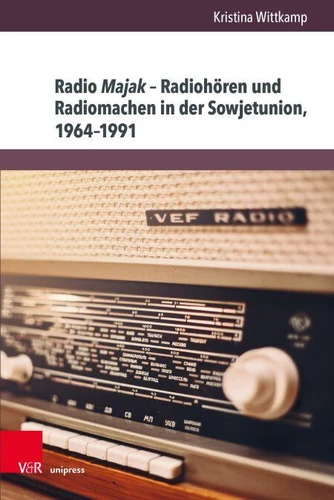
Radio Majak – Radiohören und Radiomachen in der Sowjetunion, 1964–1991
Par :Formats :
Disponible dans votre compte client Decitre ou Furet du Nord dès validation de votre commande. Le format PDF est :
- Compatible avec une lecture sur My Vivlio (smartphone, tablette, ordinateur)
- Compatible avec une lecture sur liseuses Vivlio
- Pour les liseuses autres que Vivlio, vous devez utiliser le logiciel Adobe Digital Edition. Non compatible avec la lecture sur les liseuses Kindle, Remarkable et Sony
 , qui est-ce ?
Notre partenaire de plateforme de lecture numérique où vous retrouverez l'ensemble de vos ebooks gratuitement
Pour en savoir plus sur nos ebooks, consultez notre aide en ligne ici
C'est si simple ! Lisez votre ebook avec l'app Vivlio sur votre tablette, mobile ou ordinateur :

- Nombre de pages495
- FormatPDF
- ISBN978-3-8470-1560-4
- EAN9783847015604
- Date de parution13/11/2023
- Protection num.pas de protection
- Taille9 Mo
- Infos supplémentairespdf
- ÉditeurV&R Unipress
Résumé
1964 wurde der Radiosender >Majak< von den sowjetischen Machthabern und Rundfunkzuständigen geschaffen - als Gegenangebot zu den westlichen Radiosendern BBC, VOA und RFE. Diesen Sachverhalt thematisiert der vorliegende Band und untersucht die Funktion, Konzeption und den Erfolg von >Majak< beim sowjetischen Publikum anhand dreier Akteur:innengruppen - Regime, Medienmacher:innen und Publikum. Kristina Wittkamp leistet damit einen Beitrag zur sowjetischen Kultur- und Mediengeschichte und bietet Aufschlüsse über Handlungsspielräume, Teilöffentlichkeiten und Aneignungspraktiken.
Konzeptionell fungiert >Majak< als Dispositiv, das eingebettet ist in eine Anordnungsstruktur der Akteur:innen, beteiligten Institutionen, technischen Gegebenheiten, diskursiven Strukturen, Programmkonzeptionen, Rezeptionspraktiken und Wahrnehmungen. In 1964 Soviet leadership and in charge media authorities created a new radiostation - 'Majak' should compete with Western stations like BBC, VOA and RFE.
This circumstance provides the basis for analyzing the concrete function, concept and success of 'Majak' via three different groups of agents - members of the Soviet Party leadership, broadcasters and audience. This book contributes to analyzing Soviet cultural and media history and provides Information about scopes of agency, public spheres and practices of media appropriation. 'Majak' acts as a dispositif, embedded in an arrangement of actors, participating institutions, technical structures, discourses, programme concepts, modes of reception and perception.
Konzeptionell fungiert >Majak< als Dispositiv, das eingebettet ist in eine Anordnungsstruktur der Akteur:innen, beteiligten Institutionen, technischen Gegebenheiten, diskursiven Strukturen, Programmkonzeptionen, Rezeptionspraktiken und Wahrnehmungen. In 1964 Soviet leadership and in charge media authorities created a new radiostation - 'Majak' should compete with Western stations like BBC, VOA and RFE.
This circumstance provides the basis for analyzing the concrete function, concept and success of 'Majak' via three different groups of agents - members of the Soviet Party leadership, broadcasters and audience. This book contributes to analyzing Soviet cultural and media history and provides Information about scopes of agency, public spheres and practices of media appropriation. 'Majak' acts as a dispositif, embedded in an arrangement of actors, participating institutions, technical structures, discourses, programme concepts, modes of reception and perception.