SOLDES
Jusqu'à -70% sur une sélection d'articles*

Nouveauté
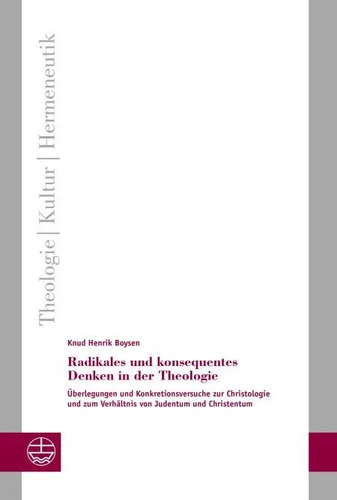
Radikales und konsequentes Denken in der Theologie. Überlegungen und Konkretionsversuche zur Christologie und zum Verhältnis von Judentum und Christentum
Par :Formats :
Disponible dans votre compte client Decitre ou Furet du Nord dès validation de votre commande. Le format PDF est :
- Compatible avec une lecture sur My Vivlio (smartphone, tablette, ordinateur)
- Compatible avec une lecture sur liseuses Vivlio
- Pour les liseuses autres que Vivlio, vous devez utiliser le logiciel Adobe Digital Edition. Non compatible avec la lecture sur les liseuses Kindle, Remarkable et Sony
 , qui est-ce ?
Notre partenaire de plateforme de lecture numérique où vous retrouverez l'ensemble de vos ebooks gratuitement
Pour en savoir plus sur nos ebooks, consultez notre aide en ligne ici
C'est si simple ! Lisez votre ebook avec l'app Vivlio sur votre tablette, mobile ou ordinateur :

- Nombre de pages120
- FormatPDF
- ISBN978-3-374-08107-3
- EAN9783374081073
- Date de parution22/05/2026
- Protection num.Digital Watermarking
- Taille2 Mo
- Infos supplémentairespdf
- ÉditeurEvangelische Verlagsanstalt
Résumé
Welche Denkform bildet den Kern theologischer Reflexion? Geht es um ein konsequentes Denken, welches einen Gedanken bis zu seiner letzten Grenze stringent verfolgt? Oder geht es um ein radikales Denken, das auch den Gegensatz oder gar den Widerspruch seiner selbst noch mitzudenken wagt?
Boysens kluges Buch schärft diese an Walter Benjamin gewonnene Grundunterscheidung an den Beispielen der christologischen Zweinaturenlehre und der Verhältnissetzung zwischen Judentum und Christentum.
Damit will die Studie zu einer neuen theologischen Grundlegung und zu einer wertschätzenden Beziehung dieser beiden wahrheitsverwandten Religionen beitragen. [Radical and Consistent Thinking in Theology. Reflections and Attempts at Concretisation on Christology and the Relationship between Judaism and Christianity] What form of thinking forms the core of theological reflection? Is it consistent thinking, which rigorously pursues an idea to its ultimate limits? Or is it radical thinking, which dares to consider even its own opposites or contradictions? Boysen's insightful book sharpens this fundamental distinction, derived from Walter Benjamin, using the examples of the Christological doctrine of two natures and the relationship between Judaism and Christianity.
In doing so, the study aims to contribute to a new theological foundation and an appreciative relationship between these two truth-related religions.
Damit will die Studie zu einer neuen theologischen Grundlegung und zu einer wertschätzenden Beziehung dieser beiden wahrheitsverwandten Religionen beitragen. [Radical and Consistent Thinking in Theology. Reflections and Attempts at Concretisation on Christology and the Relationship between Judaism and Christianity] What form of thinking forms the core of theological reflection? Is it consistent thinking, which rigorously pursues an idea to its ultimate limits? Or is it radical thinking, which dares to consider even its own opposites or contradictions? Boysen's insightful book sharpens this fundamental distinction, derived from Walter Benjamin, using the examples of the Christological doctrine of two natures and the relationship between Judaism and Christianity.
In doing so, the study aims to contribute to a new theological foundation and an appreciative relationship between these two truth-related religions.
