Sherene Razack is a Professor in the Department of Sociology and Equity Studies, University of Toronto. She is the author and editor of a number of books, including Casting Out: The Eviction of Muslims from Western Law and Politics, and Race, Space, and the Law: Unmapping a White Settler Society.
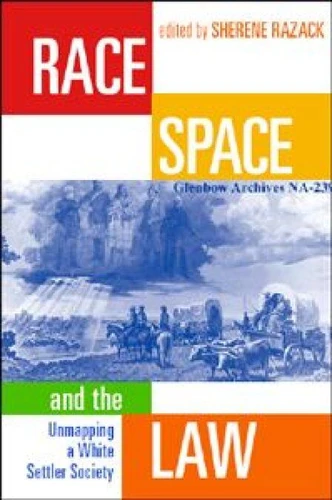
Race, Space, and the Law. Unmapping a White Settler Society
Par :Formats :
Disponible dans votre compte client Decitre ou Furet du Nord dès validation de votre commande. Le format ePub est :
- Compatible avec une lecture sur My Vivlio (smartphone, tablette, ordinateur)
- Compatible avec une lecture sur liseuses Vivlio
- Pour les liseuses autres que Vivlio, vous devez utiliser le logiciel Adobe Digital Edition. Non compatible avec la lecture sur les liseuses Kindle, Remarkable et Sony
 , qui est-ce ?
Notre partenaire de plateforme de lecture numérique où vous retrouverez l'ensemble de vos ebooks gratuitement
Pour en savoir plus sur nos ebooks, consultez notre aide en ligne ici
C'est si simple ! Lisez votre ebook avec l'app Vivlio sur votre tablette, mobile ou ordinateur :

- Nombre de pages314
- FormatePub
- ISBN978-1-77113-694-5
- EAN9781771136945
- Date de parution16/12/2025
- Protection num.Digital Watermarking
- Taille4 Mo
- Infos supplémentairesepub
- ÉditeurBetween the Lines
Résumé
Race, Space, and the Law belongs to a growing field of exploration that spans critical geography, sociology, law, education, and critical race and feminist studies. Writers who share this terrain reject the idea that spaces, and the arrangement of bodies in them, emerge naturally over time. Instead, they look at how spaces are created and the role of law in shaping and supporting them. They expose hierarchies that emerge from, and in turn produce, oppressive spatial categories.
The authors' unmapping takes us through drinking establishments, parks, slums, classrooms, urban spaces of prostitution, parliaments, the main streets of cities, mosques, and the U. S.-Canada and U. S.-Mexico borders. Each example demonstrates that "place, " as a Manitoba Court of Appeal judge concluded after analyzing a section of the Indian Act, "becomes race."
The authors' unmapping takes us through drinking establishments, parks, slums, classrooms, urban spaces of prostitution, parliaments, the main streets of cities, mosques, and the U. S.-Canada and U. S.-Mexico borders. Each example demonstrates that "place, " as a Manitoba Court of Appeal judge concluded after analyzing a section of the Indian Act, "becomes race."