SOLDES
Jusqu'à -70% sur une sélection d'articles*

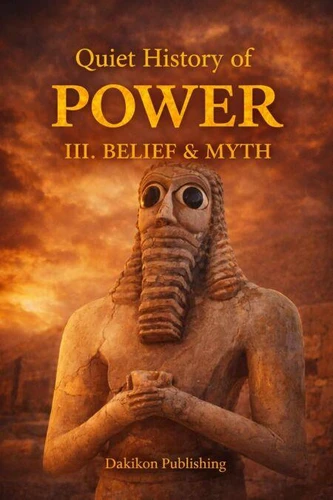
Quiet History of POWER - BLIEF and MYTH. Quiet History of Power, #3
Par :Formats :
Disponible dans votre compte client Decitre ou Furet du Nord dès validation de votre commande. Le format ePub est :
- Compatible avec une lecture sur My Vivlio (smartphone, tablette, ordinateur)
- Compatible avec une lecture sur liseuses Vivlio
- Pour les liseuses autres que Vivlio, vous devez utiliser le logiciel Adobe Digital Edition. Non compatible avec la lecture sur les liseuses Kindle, Remarkable et Sony
 , qui est-ce ?
Notre partenaire de plateforme de lecture numérique où vous retrouverez l'ensemble de vos ebooks gratuitement
Pour en savoir plus sur nos ebooks, consultez notre aide en ligne ici
C'est si simple ! Lisez votre ebook avec l'app Vivlio sur votre tablette, mobile ou ordinateur :

- FormatePub
- ISBN8232997823
- EAN9798232997823
- Date de parution24/02/2026
- Protection num.pas de protection
- Infos supplémentairesepub
- ÉditeurDraft2Digital
Résumé
Power does not begin with armies. It begins with belief. Quiet History of Power III: Belief and Myths follows the moment when authority stopped being only physical and became meaningful. Across different societies and eras, people did not obey power only because they feared it. They obeyed because they understood it, explained it, and slowly accepted it as part of the order of the world. This volume explores how myths formed memory, how memory created legitimacy, and how legitimacy allowed power to endure longer than force ever could.
Each chapter observes the same human pattern in different historical settings. First comes uncertainty. Then explanation. Then ritual. Then tradition. Over time belief becomes structure, and structure becomes reality. The book does not retell famous legends. Instead, it looks at what myths did to everyday life. How ordinary people lived under sacred authority. How communities justified hierarchy. How new religions replaced old ones without fully erasing them.
And how the past survived inside the present as memory. Calm, reflective, and human-centered, this is a narrative history about meaning rather than events. A study of how societies turned stories into order and order into power.
Each chapter observes the same human pattern in different historical settings. First comes uncertainty. Then explanation. Then ritual. Then tradition. Over time belief becomes structure, and structure becomes reality. The book does not retell famous legends. Instead, it looks at what myths did to everyday life. How ordinary people lived under sacred authority. How communities justified hierarchy. How new religions replaced old ones without fully erasing them.
And how the past survived inside the present as memory. Calm, reflective, and human-centered, this is a narrative history about meaning rather than events. A study of how societies turned stories into order and order into power.