
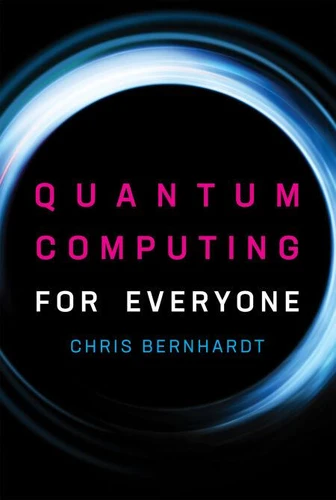
Quantum Computing for Everyone
Par :Formats :
Disponible dans votre compte client Decitre ou Furet du Nord dès validation de votre commande. Le format ePub protégé est :
- Compatible avec une lecture sur My Vivlio (smartphone, tablette, ordinateur)
- Compatible avec une lecture sur liseuses Vivlio
- Pour les liseuses autres que Vivlio, vous devez utiliser le logiciel Adobe Digital Edition. Non compatible avec la lecture sur les liseuses Kindle, Remarkable et Sony
- Non compatible avec un achat hors France métropolitaine
 , qui est-ce ?
Notre partenaire de plateforme de lecture numérique où vous retrouverez l'ensemble de vos ebooks gratuitement
Pour en savoir plus sur nos ebooks, consultez notre aide en ligne ici
C'est si simple ! Lisez votre ebook avec l'app Vivlio sur votre tablette, mobile ou ordinateur :

- Nombre de pages216
- FormatePub
- ISBN978-0-262-35094-5
- EAN9780262350945
- Date de parution19/03/2019
- Protection num.Adobe DRM
- Taille10 Mo
- Infos supplémentairesepub
- ÉditeurThe MIT Press
Résumé
FOR NON-EXPERTS: Get an accessible introduction to quantum computing as a mathematician explains quantum algorithms, quantum entanglement, and more. Quantum computing is a beautiful fusion of quantum physics and computer science! Quantum computing incorporates some of the most stunning ideas from 20th-century physics into an entirely new way of thinking about computation. Here, Chris Bernhardt offers an introduction to quantum computing that is accessible to anyone comfortable with high school mathematics.
A mathematician himself, Bernhardt simplifies the mathematics and provides elementary examples that illustrate both how the math works and what it means. He explains for the non-expert: . Quantum bits, or qubits-the basic unit of quantum computing. Quantum entanglement and what it means when qubits are entangled. Quantum cryptography. Classical computing topics like bits, gates, and logic. Quantum gates. Quantum algorithms and their speed.
Quantum computers and how they're built. And more! By the end of the book, readers understand that quantum computing and classical computing are not two distinct disciplines, and that quantum computing is the fundamental form of computing.
A mathematician himself, Bernhardt simplifies the mathematics and provides elementary examples that illustrate both how the math works and what it means. He explains for the non-expert: . Quantum bits, or qubits-the basic unit of quantum computing. Quantum entanglement and what it means when qubits are entangled. Quantum cryptography. Classical computing topics like bits, gates, and logic. Quantum gates. Quantum algorithms and their speed.
Quantum computers and how they're built. And more! By the end of the book, readers understand that quantum computing and classical computing are not two distinct disciplines, and that quantum computing is the fundamental form of computing.
A propos de Chris Bernhardt
21,53 €