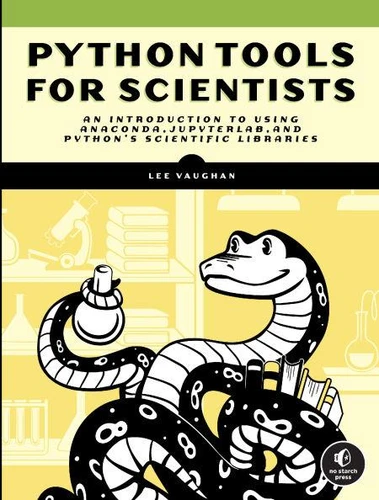
Python Tools for Scientists. An Introduction to Using Anaconda, JupyterLab, and Python's Scientific Libraries
Par :Formats :
Disponible dans votre compte client Decitre ou Furet du Nord dès validation de votre commande. Le format ePub est :
- Compatible avec une lecture sur My Vivlio (smartphone, tablette, ordinateur)
- Compatible avec une lecture sur liseuses Vivlio
- Pour les liseuses autres que Vivlio, vous devez utiliser le logiciel Adobe Digital Edition. Non compatible avec la lecture sur les liseuses Kindle, Remarkable et Sony
 , qui est-ce ?
Notre partenaire de plateforme de lecture numérique où vous retrouverez l'ensemble de vos ebooks gratuitement
Pour en savoir plus sur nos ebooks, consultez notre aide en ligne ici
C'est si simple ! Lisez votre ebook avec l'app Vivlio sur votre tablette, mobile ou ordinateur :

- Nombre de pages744
- FormatePub
- ISBN978-1-7185-0267-3
- EAN9781718502673
- Date de parution17/01/2023
- Protection num.pas de protection
- Taille37 Mo
- Infos supplémentairesepub
- ÉditeurNo Starch Press
Résumé
An introduction to the Python programming language and its most popular tools for scientists, engineers, students, and anyone who wants to use Python for research, simulations, and collaboration. Python Tools for Scientists will introduce you to Python tools you can use in your scientific research, including Anaconda, Spyder, Jupyter Notebooks, JupyterLab, and numerous Python libraries. You'll learn to use Python for tasks such as creating visualizations, representing geospatial information, simulating natural events, and manipulating numerical data.
Once you've built an optimal programming environment with Anaconda, you'll learn how to organize your projects and use interpreters, text editors, notebooks, and development environments to work with your code. Following the book's fast-paced Python primer, you'll tour a range of scientific tools and libraries like scikit-learn and seaborn that you can use to manipulate and visualize your data, or analyze it with machine learning algorithms.
You'll also learn how to: Create isolated projects in virtual environments, build interactive notebooks, test code in the Qt console, and use Spyder's interactive development features Use Python's built-in data types, write custom functions and classes, and document your code Represent data with the essential NumPy, Matplotlib, and pandas libraries Use Python plotting libraries like Plotly, HoloViews, and Datashader to handle large datasets and create 3D visualizations Regardless of your scientific field, Python Tools for Scientists will show you how to choose the best tools to meet your research and computational analysis needs.
Once you've built an optimal programming environment with Anaconda, you'll learn how to organize your projects and use interpreters, text editors, notebooks, and development environments to work with your code. Following the book's fast-paced Python primer, you'll tour a range of scientific tools and libraries like scikit-learn and seaborn that you can use to manipulate and visualize your data, or analyze it with machine learning algorithms.
You'll also learn how to: Create isolated projects in virtual environments, build interactive notebooks, test code in the Qt console, and use Spyder's interactive development features Use Python's built-in data types, write custom functions and classes, and document your code Represent data with the essential NumPy, Matplotlib, and pandas libraries Use Python plotting libraries like Plotly, HoloViews, and Datashader to handle large datasets and create 3D visualizations Regardless of your scientific field, Python Tools for Scientists will show you how to choose the best tools to meet your research and computational analysis needs.