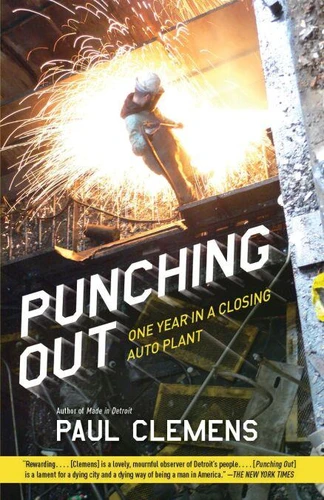
Punching Out. One Year in a Closing Auto Plant
Par :Formats :
Disponible dans votre compte client Decitre ou Furet du Nord dès validation de votre commande. Le format ePub protégé est :
- Compatible avec une lecture sur My Vivlio (smartphone, tablette, ordinateur)
- Compatible avec une lecture sur liseuses Vivlio
- Pour les liseuses autres que Vivlio, vous devez utiliser le logiciel Adobe Digital Edition. Non compatible avec la lecture sur les liseuses Kindle, Remarkable et Sony
- Non compatible avec un achat hors France métropolitaine
 , qui est-ce ?
Notre partenaire de plateforme de lecture numérique où vous retrouverez l'ensemble de vos ebooks gratuitement
Pour en savoir plus sur nos ebooks, consultez notre aide en ligne ici
C'est si simple ! Lisez votre ebook avec l'app Vivlio sur votre tablette, mobile ou ordinateur :

- Nombre de pages240
- FormatePub
- ISBN978-0-385-53262-4
- EAN9780385532624
- Date de parution18/01/2011
- Protection num.Adobe DRM
- Taille1 Mo
- Infos supplémentairesepub
- ÉditeurAnchor
Résumé
An elegy-angry, funny, and powerfully detailed-about the slow death of a Detroit auto plant and an American way of life. How does a country dismantle a century's worth of its industrial heritage? To answer that question, Paul Clemens investigates the 2006 closing of one of America's most potent symbols: a Detroit auto plant. Prior to its closing, the Budd Company stamping plant on Detroit's East Side, built in 1919, was one of the oldest active auto plants in America's foremost industrial city-one whose history includes the nation's proudest moments and those of its working class.
Its closing also reflects the character of the country in a new era-the sad, brutal process of picking it apart and sending it, piece by piece, to the countries that now have use for its machines. Punching Out is an up-close report, at once tender and angry, from the meanest, sharpest edge of America's deindustrialization, and a lament for a working-class culture that once defined a prosperous America-and that is now on the verge of economic extinction.
Its closing also reflects the character of the country in a new era-the sad, brutal process of picking it apart and sending it, piece by piece, to the countries that now have use for its machines. Punching Out is an up-close report, at once tender and angry, from the meanest, sharpest edge of America's deindustrialization, and a lament for a working-class culture that once defined a prosperous America-and that is now on the verge of economic extinction.