SOLDES
Jusqu'à -70% sur une sélection d'articles*

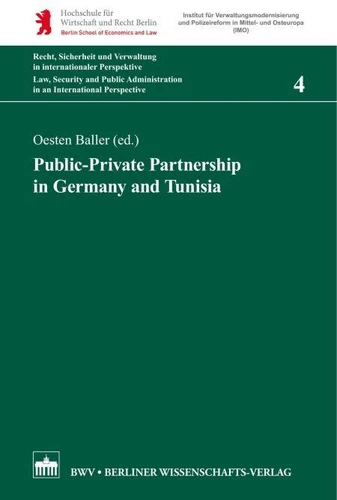
Public-Private Partnership in Germany and Tunisia
Par :Formats :
Disponible dans votre compte client Decitre ou Furet du Nord dès validation de votre commande. Le format PDF est :
- Compatible avec une lecture sur My Vivlio (smartphone, tablette, ordinateur)
- Compatible avec une lecture sur liseuses Vivlio
- Pour les liseuses autres que Vivlio, vous devez utiliser le logiciel Adobe Digital Edition. Non compatible avec la lecture sur les liseuses Kindle, Remarkable et Sony
 , qui est-ce ?
Notre partenaire de plateforme de lecture numérique où vous retrouverez l'ensemble de vos ebooks gratuitement
Pour en savoir plus sur nos ebooks, consultez notre aide en ligne ici
C'est si simple ! Lisez votre ebook avec l'app Vivlio sur votre tablette, mobile ou ordinateur :

- Nombre de pages182
- FormatPDF
- ISBN978-3-8305-2164-8
- EAN9783830521648
- Date de parution23/08/2016
- Protection num.Digital Watermarking
- Taille2 Mo
- Infos supplémentairespdf
- ÉditeurBWV
Résumé
Public-Private Partnership models are often controversially discussed with regard to not only their benefits and advantages, but also the chances and risks inherent in their realisation. However, there is no doubt that in developing countries the involvement of private investment and private partner can contribute to economic growth and the expansion of infrastructure. In Tunisia, the government is actively supporting PPP projects, believing that they are crucial for the further development of the country's economy and the welfare of the people.
The contributions in this book are the result of the cooperation between Tunisian and German scholars and reflect general as well as country-specific current and future frameworks of PPP and best practices of both countries. A comparison of Tunisia's concession-based concept with the infrastructure- and construction-focused approach in Germany leads to the conclusion that an open framework for PPP is desirable.
The volume provides not only scholars, but also policymakers in Maghreb countries and development and investment protagonists with an overview of the PPP sector's current development in Tunisia and Germany.
The contributions in this book are the result of the cooperation between Tunisian and German scholars and reflect general as well as country-specific current and future frameworks of PPP and best practices of both countries. A comparison of Tunisia's concession-based concept with the infrastructure- and construction-focused approach in Germany leads to the conclusion that an open framework for PPP is desirable.
The volume provides not only scholars, but also policymakers in Maghreb countries and development and investment protagonists with an overview of the PPP sector's current development in Tunisia and Germany.