SOLDES
Jusqu'à -70% sur une sélection d'articles*

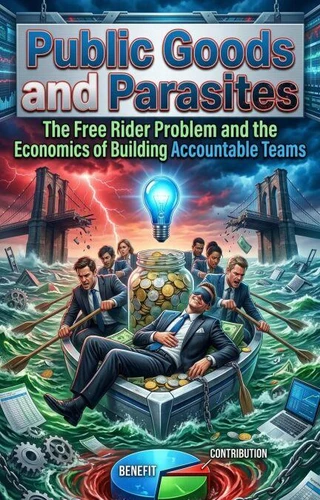
Public Goods and Parasites. The Free Rider Problem and the Economics of Building Accountable Teams
Par :Formats :
Disponible dans votre compte client Decitre ou Furet du Nord dès validation de votre commande. Le format ePub est :
- Compatible avec une lecture sur My Vivlio (smartphone, tablette, ordinateur)
- Compatible avec une lecture sur liseuses Vivlio
- Pour les liseuses autres que Vivlio, vous devez utiliser le logiciel Adobe Digital Edition. Non compatible avec la lecture sur les liseuses Kindle, Remarkable et Sony
 , qui est-ce ?
Notre partenaire de plateforme de lecture numérique où vous retrouverez l'ensemble de vos ebooks gratuitement
Pour en savoir plus sur nos ebooks, consultez notre aide en ligne ici
C'est si simple ! Lisez votre ebook avec l'app Vivlio sur votre tablette, mobile ou ordinateur :

- Nombre de pages180
- FormatePub
- ISBN978-3-565-30572-8
- EAN9783565305728
- Date de parution09/03/2026
- Protection num.pas de protection
- Taille970 Ko
- Infos supplémentairesepub
- ÉditeurEmphaloz Publishing House
Résumé
Why do group projects always seem to burden the most competent person while the rest coast along? This is the Free Rider Problem, a core concept in behavioral economics where individuals benefit from shared resources or collective effort without paying their fair share. In modern business, this phenomenon destroys morale, dilutes productivity, and silently bankrupts collaborative initiatives.
This business manual exposes the hidden mathematics of organizational parasitism.
It dissects why traditional bonus structures and open-ended team goals actually encourage laziness rather than innovation. By analyzing real-world corporate data and game theory, the book explains how poorly designed systems reward those who hide in the crowd and punish your most valuable high-performers. Stop subsidizing underachievers. Learn how to construct airtight incentive models, redesign workflow transparency, and implement accountability metrics that completely eliminate the free rider loophole, ensuring that every member of your organization pulls their own weight.
It dissects why traditional bonus structures and open-ended team goals actually encourage laziness rather than innovation. By analyzing real-world corporate data and game theory, the book explains how poorly designed systems reward those who hide in the crowd and punish your most valuable high-performers. Stop subsidizing underachievers. Learn how to construct airtight incentive models, redesign workflow transparency, and implement accountability metrics that completely eliminate the free rider loophole, ensuring that every member of your organization pulls their own weight.