
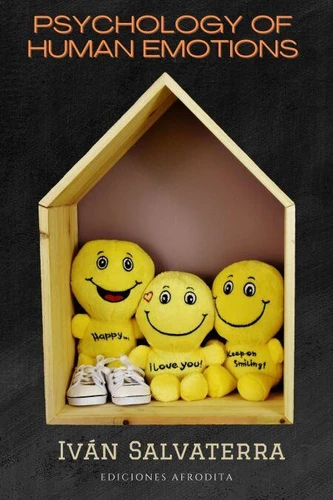
Psychology of Human Emotions
Par :Formats :
Disponible dans votre compte client Decitre ou Furet du Nord dès validation de votre commande. Le format ePub est :
- Compatible avec une lecture sur My Vivlio (smartphone, tablette, ordinateur)
- Compatible avec une lecture sur liseuses Vivlio
- Pour les liseuses autres que Vivlio, vous devez utiliser le logiciel Adobe Digital Edition. Non compatible avec la lecture sur les liseuses Kindle, Remarkable et Sony
 , qui est-ce ?
Notre partenaire de plateforme de lecture numérique où vous retrouverez l'ensemble de vos ebooks gratuitement
Pour en savoir plus sur nos ebooks, consultez notre aide en ligne ici
C'est si simple ! Lisez votre ebook avec l'app Vivlio sur votre tablette, mobile ou ordinateur :

- FormatePub
- ISBN8215910672
- EAN9798215910672
- Date de parution05/04/2023
- Protection num.pas de protection
- Infos supplémentairesepub
- ÉditeurWMG Publishing
Résumé
Emotional Learning is the training and development of the skills needed to manage big feelings, build relationships, gain self-awareness, solve problems, make responsible decisions, and set goals. It also focuses on open communication, social awareness, and empathy. Through the content of this book, the reader is expected to 1) Identify and understand their own emotions (self-understanding). This includes identifying your own strengths and limitations and having reasonable self-confidence.
2) Know how to manage your emotions and manage yourself (self-management). This includes stress management, impulse control, self-motivation, and sequencing to achieve personal goals. 3) Identify and understand the emotions of others (social skills). 4) Skills to build and maintain healthy social relationships. This includes active listening, cooperation, the ability to avoid negative social influences, the skills to communicate constructively in conflict, and the knowledge of how and when to provide assistance when needed.
5) Responsible decision-making (emotional skills) Acting in a manner consistent with ethical standards, concern for safety, social norms, and a realistic assessment of the consequences of various actions, and the well-being of oneself and others.
2) Know how to manage your emotions and manage yourself (self-management). This includes stress management, impulse control, self-motivation, and sequencing to achieve personal goals. 3) Identify and understand the emotions of others (social skills). 4) Skills to build and maintain healthy social relationships. This includes active listening, cooperation, the ability to avoid negative social influences, the skills to communicate constructively in conflict, and the knowledge of how and when to provide assistance when needed.
5) Responsible decision-making (emotional skills) Acting in a manner consistent with ethical standards, concern for safety, social norms, and a realistic assessment of the consequences of various actions, and the well-being of oneself and others.
A propos de Iván Salvaterra

3,99 €

Manipulación Psicológica
E-book
3,99 €
3,99 €

3,99 €

3,99 €
3,99 €

My Last Cigarette
E-book
3,99 €

Mi Último Cigarrillo
E-book
3,99 €

3,99 €

3,99 €

3,99 €

Si te Atreves Triunfas
E-book
3,99 €

Intelligence Emotional
E-book
3,99 €
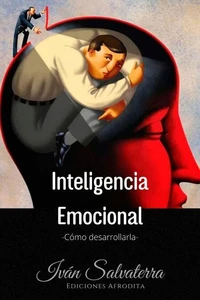
Inteligencia Emocional
E-book
3,99 €

3,99 €

El Poder de las Palabras
E-book
3,99 €

Recupera tu Vida
E-book
3,99 €

Get Your Life Back
E-book
3,99 €