SOLDES
Jusqu'à -70% sur une sélection d'articles*

Nouveauté
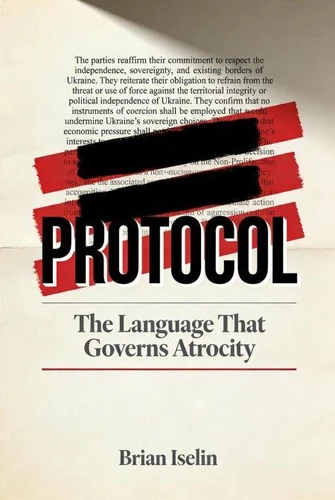
Protocol: The Language That Governs Atrocity
Par :Formats :
Disponible dans votre compte client Decitre ou Furet du Nord dès validation de votre commande. Le format ePub est :
- Compatible avec une lecture sur My Vivlio (smartphone, tablette, ordinateur)
- Compatible avec une lecture sur liseuses Vivlio
- Pour les liseuses autres que Vivlio, vous devez utiliser le logiciel Adobe Digital Edition. Non compatible avec la lecture sur les liseuses Kindle, Remarkable et Sony
 , qui est-ce ?
Notre partenaire de plateforme de lecture numérique où vous retrouverez l'ensemble de vos ebooks gratuitement
Pour en savoir plus sur nos ebooks, consultez notre aide en ligne ici
C'est si simple ! Lisez votre ebook avec l'app Vivlio sur votre tablette, mobile ou ordinateur :

- FormatePub
- ISBN8235034037
- EAN9798235034037
- Date de parution28/05/2026
- Protection num.pas de protection
- Infos supplémentairesepub
- ÉditeurIoakim Ioakim
Résumé
When the Security Council expresses that it is deeply concerned by a situation in which thousands of people are being killed, it is not failing to act. It is acting - precisely, professionally, in the manner for which it was designed. "Deeply concerned" sits at a specific position on a graduated scale of vocabulary that has been in continuous use since 1967. It records that the institution has been informed.
It creates no obligation. The drafters who placed it in the resolution knew exactly what they were placing, and what they were not. Protocol is a forensic examination of diplomatic language as technology - a system refined across eighty years to ensure that the most consequential decisions ever made about human life are never spoken plainly by anyone who can be held to account for speaking them. Brian Iselin spent three decades working inside the architecture this book exposes: building mechanisms, drafting frameworks, sitting in the rooms where the real negotiation occurs before the formal session opens.
He is not writing from outside the system. He is writing from inside a craft tradition he understands completely, about instruments he has used himself. The cases are precise and cumulative. "Deeply concerned" and the graduated vocabulary of Security Council resolutions - designed not to fail to protect civilians, but to process their deaths correctly. The informal consultation rooms where resolutions are made before they are formally adopted, and whose proceedings do not appear in the official record by design.
The founding architecture of the United Nations, designed at Dumbarton Oaks and Yalta in 1944 before fifty nations were invited to San Francisco to sign what had already been decided. The Australia-China Human Rights Dialogue, where two governments holding irreconcilable theories of what law is for held sixteen years of formal meetings and produced communiqués recording alignment that had never existed.
The Budapest Memorandum of 1994, whose drafters chose the word "assurances" over "guarantees" knowing with complete precision what each word would and would not require of the signatories - a distinction whose consequences were confirmed on the morning of 24 February 2022, when lawyers in Washington and London reviewed the text and found it said exactly what it had always said. The Shanghai Communiqué of 1972, where a single verb - "acknowledges" rather than "recognises" - has governed the international status of Taiwan for fifty years and underpins the entire global semiconductor industry.
The ASEAN consensus rule, which gives any single member a procedural veto and has delivered that veto, consistently, to whichever member China has most substantially invested in. The Minsk II framework, whose drafters built in a sequencing that made full implementation politically impossible before the ink dried - as Angela Merkel confirmed, in retirement, on the record, in December 2022. Each chapter adds a word to a vocabulary.
By the final chapter, the reader can perform the analysis without instruction: retrieve any diplomatic document, read the words chosen and the words declined, and understand what the document commits anyone to and what it has been drafted to forestall. This book has no solutions. It does not propose a better architecture or a reformed vocabulary. It produces a reader who can see what is happening.
That is not a small acquisition. It is also not a comfort. The system does not fail. It performs. It has been performing, without interruption, since 1945.
It creates no obligation. The drafters who placed it in the resolution knew exactly what they were placing, and what they were not. Protocol is a forensic examination of diplomatic language as technology - a system refined across eighty years to ensure that the most consequential decisions ever made about human life are never spoken plainly by anyone who can be held to account for speaking them. Brian Iselin spent three decades working inside the architecture this book exposes: building mechanisms, drafting frameworks, sitting in the rooms where the real negotiation occurs before the formal session opens.
He is not writing from outside the system. He is writing from inside a craft tradition he understands completely, about instruments he has used himself. The cases are precise and cumulative. "Deeply concerned" and the graduated vocabulary of Security Council resolutions - designed not to fail to protect civilians, but to process their deaths correctly. The informal consultation rooms where resolutions are made before they are formally adopted, and whose proceedings do not appear in the official record by design.
The founding architecture of the United Nations, designed at Dumbarton Oaks and Yalta in 1944 before fifty nations were invited to San Francisco to sign what had already been decided. The Australia-China Human Rights Dialogue, where two governments holding irreconcilable theories of what law is for held sixteen years of formal meetings and produced communiqués recording alignment that had never existed.
The Budapest Memorandum of 1994, whose drafters chose the word "assurances" over "guarantees" knowing with complete precision what each word would and would not require of the signatories - a distinction whose consequences were confirmed on the morning of 24 February 2022, when lawyers in Washington and London reviewed the text and found it said exactly what it had always said. The Shanghai Communiqué of 1972, where a single verb - "acknowledges" rather than "recognises" - has governed the international status of Taiwan for fifty years and underpins the entire global semiconductor industry.
The ASEAN consensus rule, which gives any single member a procedural veto and has delivered that veto, consistently, to whichever member China has most substantially invested in. The Minsk II framework, whose drafters built in a sequencing that made full implementation politically impossible before the ink dried - as Angela Merkel confirmed, in retirement, on the record, in December 2022. Each chapter adds a word to a vocabulary.
By the final chapter, the reader can perform the analysis without instruction: retrieve any diplomatic document, read the words chosen and the words declined, and understand what the document commits anyone to and what it has been drafted to forestall. This book has no solutions. It does not propose a better architecture or a reformed vocabulary. It produces a reader who can see what is happening.
That is not a small acquisition. It is also not a comfort. The system does not fail. It performs. It has been performing, without interruption, since 1945.